New fiction, reviews, tea, and so on.
  • Celestial Toyroom Issue 553

    Purchase the latest issue of the Doctor Who Appreciation Society's official zine, or download a free copy! Read my reviews of the Fifth Doctor-centric CT annual and the new 15th Doctor book Spectral Scream. Plus, there's a review of my own Black Archive on Mawdryn Undead!

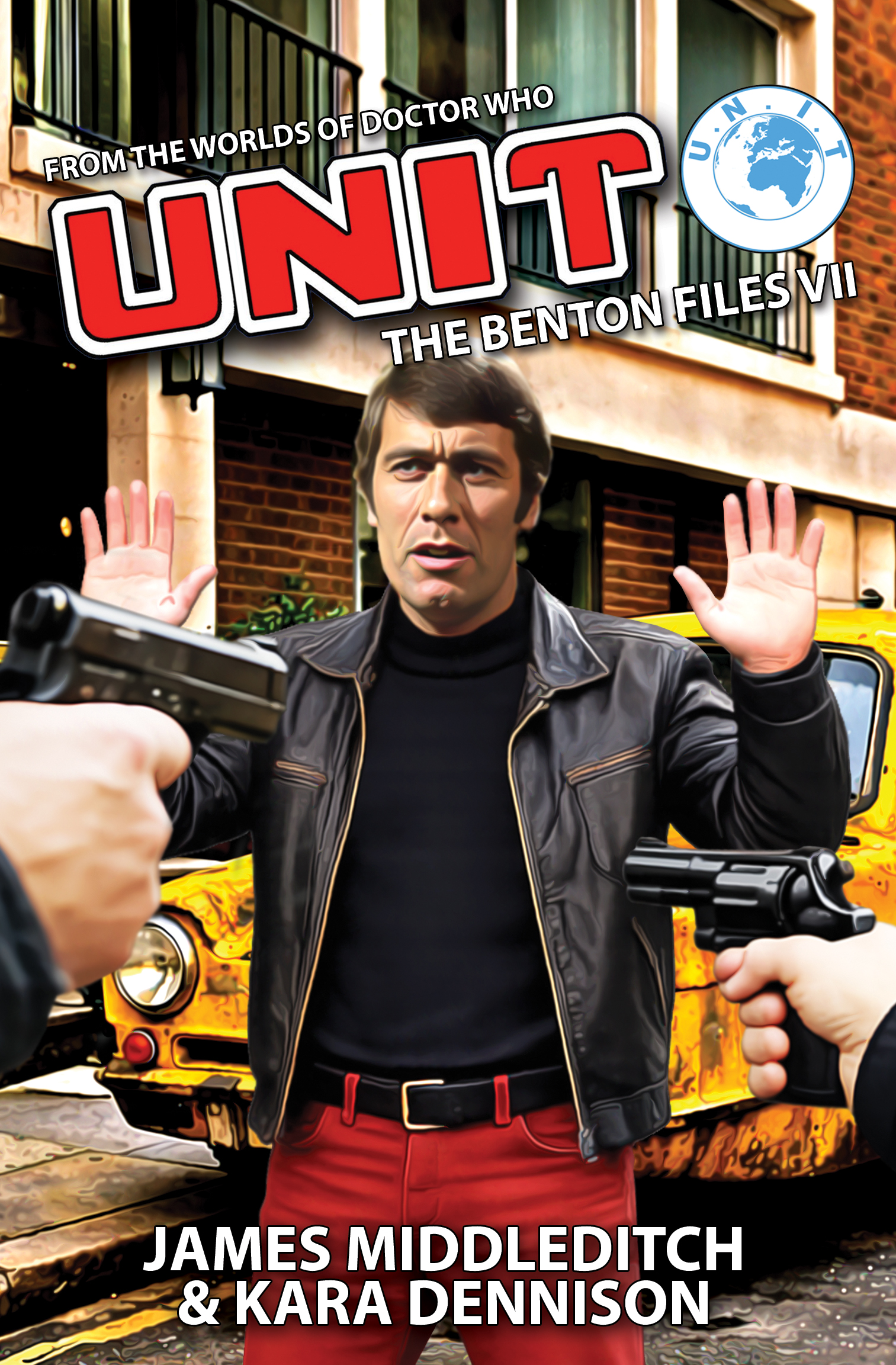
  • UNIT: The Benton Files 7

    My first foray into the UNITverse is now available for pre-order! Pick up a pair of linked stories by yours truly and James Middleditch. Mine, titled "Wiltshire Drift," follows a retired Benton through the countryside in search of a car with some serious alien power under the hood.

  • NEW FICTION: The Whole Beast

    My new flash fiction piece is now available to read free on Dream Theory! Even in a world overrun with kaiju, sometimes spite is still the best motivator.

Showing posts with label lupin rewind. Show all posts

Tuesday, July 19, 2022


Welcome to the gang, Goemon

This week's episode of Lupin the Third Part 1 is a big deal for a few reasons. It's Goemon's official induction (if there is such a thing) into the show's "gang." It's a big lore drop for Zantetsuken as we know it. And—probably the biggest deal of all—it's Hayao Miyazaki's debut. Not just as part of Lupin the Third, but as an anime director.

He didn't direct the full episode, just a couple of scenes. But it does mark the beginning of the director changeover, which is going to usher in the beginning of Lupin as we know it in a big way.

Note: This post contains sponsored links. If you purchase something through one of them, I may get a small commission. Thank you for supporting the blog!


There Are Two Wolves Inside You

Lupin in training

After the briefest of distractions, Lupin is gearing up to cross swords—this time literally—with Ishikawa Goemon XIII once again. In particular, he has his eye on a trio of scrolls that divulge the secrets of Zantetsuken, Goemon's mighty sword that cuts through steel. Lupin has a very specific reason for wanting to get his mitts on these, though: his grandfather went for the same prize. It's a matter of Lupin family pride, so he disguises himself as one of five challengers preparing to face Goemon in battle.

Lupin is not the only one who's had this idea: Fujiko is there as well, and makes quick work of Goemon's champion with a shortsword. She and Lupin, both in disguise, are the only ones to fight their way up the ranks to earn the honor of facing Goemon personally. But Fujiko bet on Lupin being there, and is prepared for him in more ways than one. (Before you go making assumptions, one of those ways is a floor full of caltrops.)

Despite Fujiko's best plans, and warnings from Goemon's mentor that Lupin might be in the ranks of his challengers, our antihero makes his way to the hiding place of the scrolls. After a round or two of bait-and-switch, we learn that yet another Lupin had designs on the treasure: The Second dueled Goemon's mentor. To bring things back around, Lupin and Goemon's mentor battle it out. Lupin wins the day with a simple pit trap, and Goemon hands over the scrolls... but he's not done.

See, Goemon still wants to duel Lupin. The two do eventually meet to face off, but gosh darn it, they make friends instead. They're both having a great damn time, and Jigen closes out the episode with the realization that their weird little gang has gotten weirder and less little.


The Third vs. the Thirteenth

Lupin and Goemon would reexamine their rivalry again decades later

Lupin and Goemon's friendly rivalry is one of the series's more fascinating dynamics. They clearly have mutual respect. Over time, they become more similar, but initially start out as quite different. While Goemon is a staunch traditionalist, Lupin kicks off his existence by taking the "gentleman" straight out of "gentleman thief." (That will eventually come back, but we're getting there.)

All that said, there's a recurring point on Goemon's side of this scenario, even in the scant two episodes we've seen him in so far. Both here and in his first episode, he's looked down on for not killing Lupin on sight. More than one mentor has called him soft for refusing to do away with the rival thief, and even Lupin himself did away with one of said mentors with exceptional dramatic timing.

Of course, there's some narrative causality there: you can't kill the star of the show. But it's also an interesting early sign of this mutual respect they have for each other. Lupin makes no secret of his when Goemon hands over the scrolls as promised. Goemon never outright admits his respect, but it's pretty obvious by the end when their "duel" ends with the pair of them laughing and having a grand day out.

We'll see Goemon finally bring this rivalry to bear again in Part 5, as pretty much every player does as regards their relationship with Lupin. For now, it's interesting to see where it all began, and how Goemon's own feelings went from murderous ire to cheerful respect.


The Miyazaki Factor

from The Castle of Cagliostro

As I mentioned earlier, this episode marks Hayao Miyazaki's foray into Lupin the Third, and into anime in general. He only directed a couple of scenes, and originally went uncredited, but it's our starting point for the soon-to-be-legendary director's involvement.

For those less familiar with the timeline of Miyazaki's work, The Castle of Cagliostro came before Studio Ghibli was even a thing—six years before, as a matter of fact. It was partly Miyazaki's responsibilities with his new studio that led to the 1985 Pink Jacket film Legend of the Gold of Babylon, the Part 6 episode "Darwin's Bird," and Mamoru Oshii's film Angel's Egg, but that's for another time.

What's important to note is that Miyazaki will, in the very near future of the series as I'm covering it, make traceable changes to Lupin as a character. You can almost see those changes starting to hit here. When Lupin attempts to sneak into Fujiko's bedroom, he gets a foot full of spikes. We've already seen several examples of his more lecherous manga self either getting toned down or taking serious pain for his attempted actions. 

As of episode 7, Green Jacket Lupin still hasn't become the more gentlemanly version of himself we're familiar with. That will take time, and most of it will hit in Cagliostro. But as we go forward in these blog posts, keep your eyes peeled for the sort of person Lupin becomes.

Next time, it's a proper heist with the whole gang!
6:10 PM   Posted by Kara Dennison in with No comments
Read More

Wednesday, July 6, 2022


Waitin for the Lupin in the rain

Episode 6 of Lupin the Third Part 1 is... a hell of a thing. We've finally got the entire group assembled, we know who everyone is and what they stand for. And also, we've got like. Amnesia machines and diamonds inside corpses. It wouldn't be right to say this is the weirdest the series has been, considering we've met Linda the exploding flower witch. But it's a screwy one full of double- and triple-crosses. And we see the return of the whole idea of the Lupin Syndicate.

Note: This post contains sponsored links. If you purchase anything through one of these links, I may get a small commission. Thank you for supporting my work!


Welcome to the Amnesia Machine

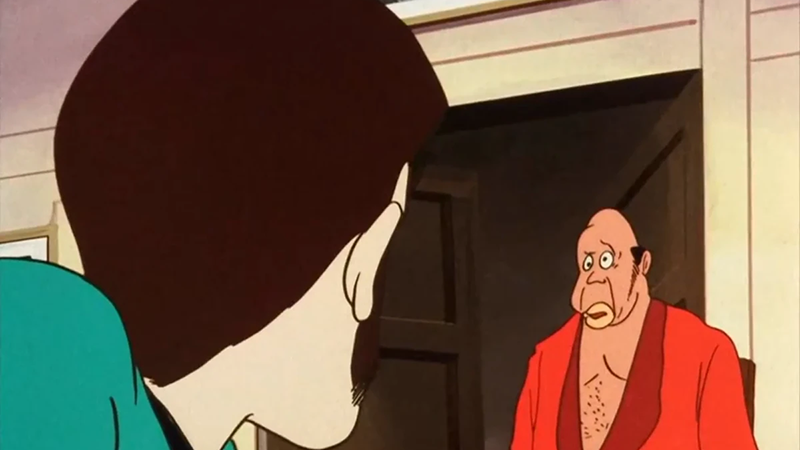
Lupin and this guy

As the episode title indicates, we start on a rainy day. And not a great one. Lupin and Jigen are, let's say, forcibly encouraged to assist with a job. (The forcible encouragement is issued by a fella who goes by the code name "Kid's Meal," which Lupin absolutely will not let go, nor should he.) Three guesses as to who's involved in today's heist. That's right, it's Fujiko.

She's currently playing caretaker to a dude who, frankly, looks like he's seen better days. No name, no memory, no animation. He just sits there looking a bit fishy. There's a lot of mystery around this guy, too. Apparently a highly-regarded doctor went missing in his general vicinity.

Lupin's attempts to get to the bottom of what's going on lead to him nearly getting killed, but the story finally cracks open. This guy is Kamaitachi, a once high-ranking mob boss who inflicted temporary amnesia on himself to guard some big secret. That big secret involved the aforementioned doctor who, when refusing to get into the amnesia machine (an actual thing—maybe Goemon's mentor's story wasn't so wild after all), was shot and killed.

Unfortunately, Kamaitachi died mere days before his amnesia was due to wear off. His secret, as it turns out, is that he had a precious diamond called the Star of Kilimanjaro surgically implanted in him to hide it. The self-inflicted amnesia kept it extra safe... but he didn't live long enough to benefit. Lupin rallies the troops to intercept the car (guarded by Zenigata) taking Kamaitachi's body to the morgue, ousting an imposter Jigen in the process.

In the end... well. In the end, Fujiko gets her diamond.


Lupin the 3rd The Woman Called Fujiko Mine Blu-ray - $44.96

from: Right Stuf, Inc.

Return of the Lupin Syndicate

Lupin, Jigen, and a new ally

I've talked before about the presence of the Lupin Syndicate in the manga and early anime, and how it eventually faded away. It's weird to look back on the earliest days of Green Jacket era and see Lupin with a reputation that's closer to mafioso than gentleman thief. His syndicate has its own motto, a bunch of members, and is relatively feared. We see this organization hat-tipped in Strange Psychokinetic Strategy, the extremely weird live-action film (and the first-ever Lupin the Third film), with Lupin not particularly wanting to take up the reins Because Fujiko.

The decision to veer away from the Syndicate, with the group eventually consisting primarily of the main four (five if you count Zenigata, which I do whether he likes it or not), has served the series well. Lupin clearly has connections; but they're more peers than underlings, which allows for far more interesting story beats. Having him as an authority figure takes a little of the intrigue out of his dealings with these one-and-done characters. This is played with a bit in this episode, where Lupin tests the impostor Jigen with a series of ridiculous passwords. But knowing that any ally could turn enemy (or vice-versa) for the right amount of money/prestige/spite keeps the arc story relatively mobile.

Well, that and the fact that it's more fun to root for Lupin when his list of allies is small and scrappy.


The Many Faces of Fujiko

Diamonds are a girl's best friend

As with previous episodes, this one is based on stories from Monkey Punch's original manga. And, as with previous episodes, one of the major changes is the role of Fujiko. Which is to say, she's there in the manga... sort of. Specifically, she's a Fujiko: one with amnesia. Because, up until a certain point, "Fujiko" was the stock name for The Girl in different manga episodes. They were confirmed to be different people, with different family ties and backgrounds. Over time, though, she became the single character we know.

Turning Fujiko into one character changes Lupin's entire vibe, and frankly in a good way. When every woman is Fujiko no matter who she is, that kind of sends a message about Lupin and his relationship with women. Then again, Monkey Punch did not attempt to hide this. Early Lupin was a character who wanted what he wanted and could absolutely have it. The Japanese economic miracle, as I have said before, hit the late Kazuhiko Kato like a freight train.

But with a single Fujiko, we go from Lupin viewing women as a sort of nebulous Hot Female Hivemind to an almost Twelfth Doctor-ish divide between "everyone else" and "the one who could break my heart and I'd thank her for it." Granted, on the surface he still appears to treat her like he treats every woman (a jacket-dependent behavior as time goes on), and she still appears to treat him like she treats every man. But scratch the surface, and you get moments like Fujiko's tearful monologue on the cliff in "One Chance for a Prison Break." Or Blue Jacket Era. Like anything in the series, how that relationship is treated will depend on who's at the helm. But solidifying her as a single person was a damn good start.


The next episode is a biggie—as it marks Hayao Miyazaki's first (albeit uncredited) directorial work, and thus the beginning of his influence on the series.
6:49 PM   Posted by Kara Dennison in with No comments
Read More

Friday, June 17, 2022

Ishikawa Goemon XIII arrives

So far, Lupin the Third Part 1 has introduced us to four of our core five characters — the team that, no matter what else changes over the decades, won't be going anywhere. We've been down one major one, despite him appearing in the opening credits (though that's nothing weird for anime). In episode 5, though, we meet another descendant of a legendary thief. And with this episode comes a lot of lore that sometimes gets buried under the decades of TV episodes and specials.

Like, you know, the fact that Lupin and Goemon's entire association started because Goemon wants to kill Lupin.

Note: This blog post contains affiliate links. If you make a purchase through one of these links, I may make a small commission. Thanks for supporting my work!

Samurai Showdown

Lupin and Jigen's flawless disguises

This episode starts with, frankly, one of my favorite Lupin and Jigen moments. As Goemon Ishikawa XIII practices his swordplay, these two idiots in their flawless non-disguises watch and applaud. Lupin attempts to pass himself off as a talent scout, and Jigen as an American gunslinger. Shockingly, though, Goemon sees through their ruse. Can't imagine how.

As it turns out, Sandayu Momochi — Goemon's mentor and the world's most prolific assassin — has tasked Goemon with killing Lupin. Oh, and Fujiko is there, and Goemon introduces her as his girlfriend. The initial battle between Lupin and Goemon is short-lived: the former douses the latter in fast-burning fuel, but ends up burning himself in the process.

Not long after, Fujiko finds Lupin and laments the horrors of Goemon and his lascivious ways. Lupin, always ready to white knight for his girl, immediately goes out to kill the heck out of this guy... and I'm sure you can guess what's going on. In an absolutely wild and totally unexpected turn of events, Fujiko has told Goemon that Lupin is the pervert she needs saving from. They realize they've been had just in time for Momochi to open fire on them.

Fujiko gets her reward for helping Momochi, but victory is short-lived. Goemon and Lupin (naturally) both survived. When Goemon demands an explanation, Momochi spins a wild story about being brainwashed by a powerful group with advanced computers. This would be a completely legit Lupin origin story, in fairness; but for now, it's not. By Goemon's reckoning, the whole thing is a lot more simple: Momochi is past it and can't handle Goemon, the wielder of the world's strongest sword, showing him up.

Momochi escapes in a hot air balloon, taunting Goemon the whole way. You see, this is the difference between Goemon and Lupin — Lupin would've just killed Momochi. Meanwhile, on a nearby rooftop, Lupin is like "Too right" and lights Momochi's balloon up. Goemon and Lupin have one more battle in traffic, with Fujiko catching the resulting traffic accident and selling it to the local news for a tidy sum.


Thief vs. Thief

Lupin joins Goemon for a spot of potential murder

Goemon was a presence in the manga, but this is our first time encountering him (outside the opening) in the anime. A few aspects of his whole scene have changed over the years. For example, his mighty sword Zantetsuken is said in more contemporary adaptations to be forged from a meteorite. In this episode, he says it's forged from the three greatest swords ever made... making it the triple-best, I guess.

While the ridiculousness of Goemon's sword comes into play much more as time goes on, we focus primarily on his actual skills and training. We see the finesse with which he uses Zantetsuken: the episode's final shot, for example, shows him slicing through a tree, leaving the butterfly on the other side unharmed to flutter away. We also see just how hardcore traditional he is. When asked why he's so different from other Japanese people, Goemon argues that he's the one who has it right.

Most of all, though, we get to see Lupin and Goemon's real reason for hanging out. Goemon is determined to kill him — a motivation that evolves over time into Goemon considering himself the only person who gets to kill Lupin. Lupin, meanwhile, takes a liking to the guy. We'll see this reexamined (as we do every relationship in the show) in Part 5.

For now, though, what the heck is a Goemon?


Thieves Are Eternal


Like Lupin and Inspector Zenigata, Goemon has his origins in literature and legend. The original Goemon Ishikawa allegedly lived in the late 16th century, a Robin Hood-esque outlaw. Over the centuries, accounts of his life have morphed and changed hugely. There are allegations of him attempting to assassinate a feudal warlord (which one depends on who you ask), and even the story of his execution by being boiled alive varies from telling to telling.

The original Goemon has become a popular kabuki character and tends to be depicted, like Arséne Lupin, as a sort of Gentleman Thief character. And, like Lupin, back in the day he apparently had some frankly beautiful words about his chosen profession:

"Like sand in a river, thieves will forever be countless and not wash away."

These were allegedly his final words, written as a poem. It's no wonder Monkey Punch threw Goemon's descendant into the mix.

When I first got into Lupin the Third, I was completely disconnected from its literary and historical connections. Digging into all its inspirations really changes the vibe of the whole piece.

In college, I was in a production of Pseudolus for the Classics Club. The era was non-specific — or rather, it was many eras at once, meant to show how long-lived the "clever servant" trope is. Examining Lupin the Third with an eye to all the different eras and cultures of its characters is fascinating... and the arrival of Maurice Leblanc's work in Japan in the early 20th century is probably worth a deep dive of its own. For now, it's a reminder of just how much thief and detective fiction has been imported and exported.

Lupin the 3rd Part I Blu-ray

I've been off track with my posts as I started a new gig recently, and I managed to start at the busiest time of year. But I've got my feet under me, and I'm back to it. Next week (on our usual Wednesday), it's episode 6: with at least one (1) each of corpses and diamonds!

7:00 PM   Posted by Kara Dennison in with No comments
Read More

Thursday, May 26, 2022


Lupin goes to jail

Note: This post contains affiliate links. I may receive a small commission if you make a purchase through one of them. Thank you for supporting my blog!

Our first introduction to Koichi Zenigata was, technically, at the very beginning of Lupin the Third Part 1. He was a presence, but not the key antagonist. We got a taste of what he's doing there and why — his belief that the two are destined to be at odds, as well as his links to the literary Zenigata and Lupin the First's Ganimard and "Herlock Sholmes." (More on that in my first blog post in the series.) But he's not the chief antagonist there so much as an extra wrinkle. His appearance is more for the sake of crafting the universe up front.

In "One Chance for a Prison Break," we truly see Lupin and Zenigata go toe-to-toe as equals, rather than Zeni getting comically thwarted as an afterthought. It kicks off a long history of rivalry mixed with respect, bloodthirsty intent tempered by actual investment.


The Long Game

Zenigata keeping a weather eye on the prisoner

The episode starts theoretically at an end: Lupin wrapping up a successful heist with Fujiko. With embarrassingly keen timing, Zenigata and his men swoop in at the last minute, peppering Lupin with tranq rounds and carting him off to prison.

Immediately, Lupin goes off. He's not Lupin, he's one of the guards. The real Lupin has disguised both himself and the guard and swapped places. There's a hot second of concern, but Zenigata finally confirms that, yes, they caught the real deal and he's just making a scene. Lupin is bundled into a straitjacket and locked up, with his execution scheduled for a year hence.

Yeah. Execution. That's the only thing that will satisfy Zenigata. Kill the son of a bitch. Put a pin in that.

Time goes on, and Lupin attempts... well, nothing. Except growing a hell of a beard and gettin' gaunt, and continue to inure Zenigata and the guards to the whole "I'm not the real Lupin" rant. Fujiko makes repeated attempts to break him out, with Jigen stopping her each time — Lupin knows what he's doing, Jigen assures her. But even Jigen begins to wonder what's up, finally disguising himself as a Buddhist monk and paying a visit as his partner's execution draws near. Lupin assures him this is all according to keikaku.

Hell, even Zenigata is freaking out at this point. A fellow officer points out that it's almost like he wants Lupin to escape. Put a pin in that, too.

Finally, the day comes, and we discover that Lupin hasn't been idle. He's been... growing out one fingernail. Now that it's razor-sharp, he can cut his way out of his straitjacket, shave half his face, and (unshaven side forward) lure a guard in. Then he really does pull the ol' switcheroo. As the prisoner is screaming that he's not the real Lupin, that the real Lupin has pulled a switch and is now posing as a guard... oh, right. That. Of course, as planned, Zenigata rolls his eyes and waves it off.

Lupin almost gets away with it, too... except that he accidentally refers to the prison having a gas chamber rather than an electric chair. That gives the game up, but Lupin still makes his escape — taking the time to point out that, yeah, he could have escaped at any time. But since Zenigata embarrassed him by thwarting him at the last second, Lupin wanted to do the same to him.

There's just one down side to Lupin's spite-motivated plan: the forest where he and Fujiko hid their acquisition got mowed down in the intervening year.


Adaptability

Smug.

As with previous episodes, "One Chance for a Prison Break" was adapted from Monkey Punch's original manga. Specifically, the very second installment. A few changes were made here and there, chief among them being the presence of Jigen (who hadn't been introduced in the manga yet). Lupin was also due to be executed by gas chamber in the manga — hence his (not-so-)fatal slip-up in the anime.

But the adaptation action doesn't end there. This episode (and by extension the manga chapter) takes inspiration from parts of the very first Arséne Lupin collection. After being arrested in his first story ("The Arrest of Arséne Lupin," 1905), he sends a letter from prison claiming he'll be around before his trial for another round of light thievery ("Arséne Lupin in Prison," 1905).

It all kicks off in the appropriately-titled "The Escape of Arséne Lupin" (1906), when Ganimard allows Lupin to affect his jailbreak. The plan was to use the opportunity to nab Lupin's co-conspirators in the process... except that, aware he's being watched, the thief simply pops out for a meal and then returns to prison. On the same day, a lookalike was arrested and summarily released. But at trial, Ganimard becomes convinced that Lupin and the lookalike got switched around that day, and the Lupin on the stand is in fact the lookalike. And so, he's let go.

Except... whoops, it really was Lupin all along. His cohorts made sure the lookalike got in the mix on the day of his escape, and Lupin used dieting and drugs (ah, the early 20th century) to make himself look enough like the lookalike to cast doubt in Ganimard's mind.

Fortunately for The Third's health, we have it confirmed throughout the series that he prefers to use a Hollywood level makeup kit that he stows... somewhere.


Eternal Rivalry

Inspector Zenigata

The relationship between Lupin and Zenigata is, frankly, one of the best things in anime. It's interpreted a lot of different ways — full disclosure, I personally approach them as either friends or familial. Your mileage may vary, that's just what's here. Regardless.

I touched in my post on "Is Lupin Burning?" on the original Arséne Lupin's view of detectives and thieves (as he explained to Herlock Sholmes), and how we see that reflected throughout Lupin the Third. It's one of my favorite quotes from Leblanc's original stories: to paraphrase, the idea that the two are on opposite sides of a fence, with directly opposing purposes in life, and that they may occasionally meet and cross paths, but the fence may never be jumped. It's great. I love it.

Zenigata has a moment of pause in "Is Lupin Burning?" where he speculates (without actually verbalizing) on how life would be if he, a Zenigata, were not fated to chase and capture a Lupin. As time goes on, he doesn't really have to speculate, since the two are on the same side more and more as Lupin's ideals and characterization change. You see it in The Castle of Cagliostro, you absolutely see it in The First, and you get a big weird bite of it in 2001's Alcatraz Connection... where Lupin effects another jailbreak using Zenigata, his weird American partner, and a hearse.

Part V is where this really shines, though. It's a season devoted to testing and pulling on the core cast's interpersonal relationships, questioning them, and ultimately strengthening them. That includes Zenigata's obsession with bringing Lupin in. Koichi Yamadera gets to chew on possibly Zenigata's greatest monologue ever: where he explains exactly why he's doing this, filling in that blank from nearly 50 years prior.

As much as I want to just copy-paste it here, it's so much better to see it on your own.

From Part IV, episode 13

Part IV has another impressive jailbreak, this time out of a bespoke prison designed from Zenigata's own specs. I won't go into it here (maybe someday on the blog); the short version is, there's some serious power creep between these two. Driving home that Zenigata really is a high-level Lawful Good Paladin when so much of his time is spent being thwarted can be difficult. His goofiness comes from his personality, not from any lack of skill. Zenigata is good. It's just Lupin is better.

Up next, we introduce a familiar face who's been notably absent so far. And he's got a bone to pick with Lupin, too.
9:59 AM   Posted by Kara Dennison in with No comments
Read More

Thursday, May 19, 2022


Linda the Flower Witch


Note: This post contains affiliate links. If you purchase any items via these links, I may earn a small commission. Thank you for supporting my work!

Pretty much any long-running anime series has to have at least one episode like this week's. You know the kind: our hero meets a mysterious and tragic girl whose fate is inextricably linked to a thing that must be destroyed. There's probably something vaguely supernatural (or at least weird) about said thing. The girl probably doesn't deserve whatever is going on, but she's almost certainly going to die.

In this spirit, we get Linda the Boomflower Witch. Though what actually makes her a witch... I'm still trying to figure out.


The Story

Lupin and Jigen are shocked by all of this.

There's a fair bit of futzing around in this one to start. Lupin and Fujiko are on a motorboat, playfully acting like they're going to kill each other, when they catch up to some actual killers trying to take out a young woman in another boat. The assassins are a notorious gang known as the "Killer-in-Killers," and the woman is a blonde named Linda. Some sharpshooting from a previously-hidden Jigen saves the day, and Fujiko (presumably seeing Lupin is otherwise occupied) takes off with the boat.

No matter, Lupin and Linda are now on an island full of flowers. Flowers Linda smells like. The two have a nice little frolic before meeting up with Dr. Heinlein, a nuclear fission expert running experiments from his lab on the island. Turns out if you pulverize the flowers and mix them with his proprietary blend, you make a powerful explosive. The aforementioned Killers want it very much.

As for Linda? She was Dr. Heinlein's assistant, and he "ran experiments" on her involving the flowers. Now she needs them to survive. Also this "turned her into a witch," though what that actually means is sort of vague.

The battle for the explosive is underway. Fujiko wants it. The Killer-in-Killers want it. Lupin... wants to help Linda. He says as much when captured by the Killers, eventually making his escape. 

Dr. Heinlein finally decides the only solution is to burn up all the flowers so no one can use them. Where's Linda when they do this? Frolicking in the flowers, obviously. Dr. Heinlein shoots her as she's burning to death, then gets shot in return by the Killers. His last request to Lupin is to find a missile deep in the ocean, one containing the last portion of his explosive, and deliver it to a lab in Japan.

Lupin nearly manages... but Fujiko shows up, wanting to ride the missile out of the wreckage with him. He explains that any extra weight will prevent them from making it to land, but this doesn't stop her from hitching a ride. We end with Lupin, Jigen, and Fujiko paddling to shore with the remains of the missile.


Witchy Things

Linda the witch

This episode is notable for being Lupin's first (and dear God not remotely his last) time rescuing a damsel in distress. His entire motivation is Linda; and once he's gotten the horny out of his system, he actually does respond to her promise to protect her. Granted, he initially assumes she's simply being dramatic, but finding out her claims are true only strengthens his resolve.

Granted, we're dealing with pre-Miyazaki Season 1 Lupin (more on that in a moment), so he's going to have more than a smattering of his manga persona still about him. But this is where, at least in his anime form, we get a first glimpse of his more heroic side.

Then there's the whole thing of Linda herself. The story of the Third Sun flowers, Dr. Heinlein, and Linda herself doesn't come from the manga. The story "Lupin of Arabia" follows Lupin stealing a missile (with the intent of selling it and stealing it again), and is the source of the episode's final scene with Fujiko and a bit of the Killer-in-Killers action.

It's not really sticking my neck out to say this new story is a one off of Nathaniel Hawthorne's short story "Rappaccini's Daughter." Just in case you didn't have to read it in high school: our narrator Giovanni goes away to school in Padua and falls in love with Beatrice, the daughter of medical researcher Giacomo Rappaccini. Raised among the poisonous flowers he researches, she herself also becomes poisonous - and so does Giovanni the more he comes to visit her. He gives her an antidote to the poison, so she can leave her father's garden, but it ends up killing her.

Linda is a pretty clear analog for Beatrice: she's forced to live among the flowers because of an experiment, and eventually dies among them. But that's about it. It's never really explained why Dr. Heinlein claims he turned her into a witch (the word used in Japanese is majo, specifically referring to a magic-using woman, and some releases have translated it as "sorceress"). 

We do see a final shot of her as she dies, appearing to turn into a flower and waft away on the flames, and Lupin gives a similarly romantic description of her demise. Whether we're meant to see this as some magical happening, or simply an artistic interpretation of her death, it's hard to tell. It's not a terribly well animated episode to start. In fairness, Hawthorne's original work was similarly vague about Beatrice. But it does feel a bit as though there was a scene or story beat cut that might have clarified the "witch" claim.


The Lupin Syndicate

Fujiko, as seen in "Lupin of Arabia"

In my first entry of this series, I glossed straight over something pretty big: mention of the Lupin Syndicate. This gets mentioned as a major plot point in Strange Psychokinetic Strategy, the manga, and early episodes of the anime. But we don't hear about it much these days.

So, surprise! Back in the day, Lupin the Third had his own crime syndicate. And I don't just mean Jigen and Goemon and sometimes Fujiko. The manga laid down the idea to some degree that the Lupin family was actually a... you know. Family. That Lupin was feared and revered by the criminal world. And it can be a bit strange to see in retrospect.

It's not hard to see why this has gone almost entirely out the window. Lupin still has associates, old friends, old rivals. In the Blue Jacket series and forward, it's established (at least as far as the TV series go) that "Lupin" is a name passed down along a line of thieves, rather than an actual family line. But even then, he sticks to his trusted small crew.

It's part of his regeneration into the "thief with a heart of gold," it seems. It's a bit hard to argue you're a good guy when you're leading an international crime ring. That aside, we do get to see the great dichotomy of Lupin: the total goofball who can also be pretty terrifying if he cares to be. The guy who, even when his brain seems to be switched off, is potentially still keeping his eyes open. There's a fun little scene in this episode to that effect where Lupin and Fujiko, both seemingly ready to get it on under a tree, are actually squaring up to shoot the half-dozen assassins gathering around them.


Lupin the 3rd Part I Blu-ray

I want to close this one out by pointing out something someone else noticed about this episode: it's our first time seeing Lupin actually shed a tear about something. (That "something" being, of course, Linda's demise.) It's an empathy alien to Lupin in the manga, who was all about getting money and things and girls, and whose stories generally ended somewhat humorously. We still have a few episodes left until the game-changers start to arrive on the scene. But even now, he was making a move toward becoming the character we know.

Next week, Zenigata is back!

---

Like what I do? Consider dropping me a tip on Ko-fi — or bookmark the page, since I'll begin offering fresh content over there in the coming weeks!
8:05 AM   Posted by Kara Dennison in with No comments
Read More

Wednesday, May 11, 2022

Pycal

When engaging with Lupin the Third, the first thing you need to do — immediately — is suspend your disbelief. Gravity will be defied, plot armor will be donned and dropped in whatever way best serves the plot, and sometimes things will get downright paranormal. How paranormal? That's a good question.

We're all the way up to the second-ever TV anime episode, titled "The Man They Called a Magician." The episode is based on chapter 14 of Monkey Punch's original manga (released by TokyoPop as chapter 7, "The Hand Is Quicker Than the Spy.") In it, we meet Pycal: a man who can shoot fire from his fingers, levitate, and who (apparently) is impervious to bullets. Even for the notably resilient Lupin Gang, this is a lot.


Sleight of Hand


Pycal is Lupin's second-ever onscreen foe, and he's not messing around. Technically he's called "Paikaru," which is also another name for baijiu — hence Lupin's comment in the episode that his name sounds drinkable. Let's not get hung up on names, though. This guy introduces himself by setting Fujiko on fire, and that doesn't sit well with Lupin.

After a night resting up at Lupin's hideout, Fujiko is about to be treated to a big breakfast. Or she would be, if Pycal hadn't tracked her down, enduring a hail of bullets from multiple guns of varying sizes and leaving with her in tow. She has something he wants: some valuable slides of film, which she has since dropped off in Lupin's car.

On the one hand, Lupin is raring to rescue his lover. On the other, this dude just had machine gun death rained down on him, got back up, and set Lupin on fire with (it would seem) magic. Fortunately, Lupin can start to unravel most of his tricks. The last of them, it just so happens, can be figured out with the help of that all-important film.

Pycal isn't a magician, as it turns out. He is, however, in possession of some very cool science. Chief among these science-y things is a formula for a thin bulletproof membrane that, when sprayed on a person, makes them impervious to bullets and fire for a set amount of time. Lupin and Pycal eventually square off; but when  Pycal sets Lupin aflame again, all he manages to burn up is his own film. The encounter devolves into a fire fight, with the victor being whoever's bulletproof spray is freshest. That would be Lupin... meaning Pycal is eventually burned to death.

Maybe.


Love and Lies

Fujiko... sitting in a tree.

It's still early doors yet for Lupin and Fujiko, at least as far as the anime is concerned. As time goes on, their relationship (and what others think of it) will become a pivotal aspect of the story. 2018's Part V in particular relies heavily on examining all the relationships among the cast, with their strange romance being the strongest through-line. Having Fujiko finally demand to know what they are to each other, and getting an answer, is some of the most rewarding anime I've watched.

From the first episode, we get a sufficient surface-level view of their dynamic. She's operating in her own interests, with full awareness that Lupin has a weakness for her. Lupin is also aware of his weakness for her. And it's pretty clear that, whatever else he may say, he knows that any dealings with her have a high probability of ending in betrayal. He just goes ahead regardless.

Fujiko's in the midst of her own machinations with Pycal: carefully cultivating the same level of loyalty in him that she already has in Lupin, then sending them off to go toe-to-toe for dominance. Her aim is, of course, Pycal's film (or, more specifically, the formula on it). But she does, however briefly, show a bit of concern and emotional attachment for Lupin. It's when he's out of earshot, but it's there. And boy, will it stay out of earshot for a long time.


Paranormal Activity


Aspects of the sci-fi and supernatural — the ancient tech of The First, for example, or the strange history-magic of Part II's Rose of Versailles crossover episode — became more common in Lupin the Third the longer it went on. And, in particular, they became more baked into the anime's worldview the more Indiana Jones-esque it became. But Monkey Punch was no stranger to such things.

Kyosuke Mamo (a different Mamo from The Mystery of Mamo) was one of his creations: a mad sci-fi writer from the future who used his knowledge of time travel to attempt to put an end to the entire Lupin line. In fact, Mamo and Pycal would cross paths in the 2018 OVA Is Lupin Still Burning?, which Monkey Punch co-directed as a celebration of the manga's 50th anniversary. (Mamo will appear in Part I as well, with an altered back story... but all in good time.)

In other words, things of a fully sci-fi nature have always been welcome here. Which makes a character like Pycal all the more interesting. His story hammers home that, even in a world of strange happenings, everything must be somehow explicable beyond a hand-wave.

We see this in action constantly. Goemon's Zantetsuken operates well beyond the means of any real sword. But it's forged from a meteor and wielded by a legendary samurai. The gang regularly encounters technological marvels... but they are technological. At least, this is the general  rule. There will be several exceptions to prove it, especially when Lupin goes Pink Jacket. (Or when Mamoru Oshii gets involved... speaking of things for another time.)

Of course, in the next episode he apparently meets a witch named Linda... so perhaps this whole blog post will go up in flames like Pycal's film. I guess we'll see. And (like I mentioned last week) Pycal does come back in a TV special, armed with a new bag of tricks. Remember when I said he may or may not have burned to death? Yeah... it's complicated.

For now, if you want go back and watch from the beginning, there are lots of ways to do so — including a very nice Blu-ray set:


Lupin the 3rd Part I Blu-ray

---

Like what I do? Consider dropping me a tip on Ko-fi — or bookmark the page, since I'll begin offering fresh content over there in the coming weeks!
7:22 PM   Posted by Kara Dennison in with No comments
Read More

Wednesday, May 4, 2022


Lupin the Third, Part 1

Last year was the 50th anniversary of the anime adaptation of Lupin the Third. That means I spent even more time than usual talking it up over on Crunchyroll, Otaku USA, and wherever else I could get away with it.

4:00 AM   Posted by Kara Dennison in
Read More

Bookmark Us

Delicious Digg Facebook Favorites More Stumbleupon Twitter

Search