New fiction, reviews, tea, and so on.
  • Celestial Toyroom Issue 553

    Purchase the latest issue of the Doctor Who Appreciation Society's official zine, or download a free copy! Read my reviews of the Fifth Doctor-centric CT annual and the new 15th Doctor book Spectral Scream. Plus, there's a review of my own Black Archive on Mawdryn Undead!

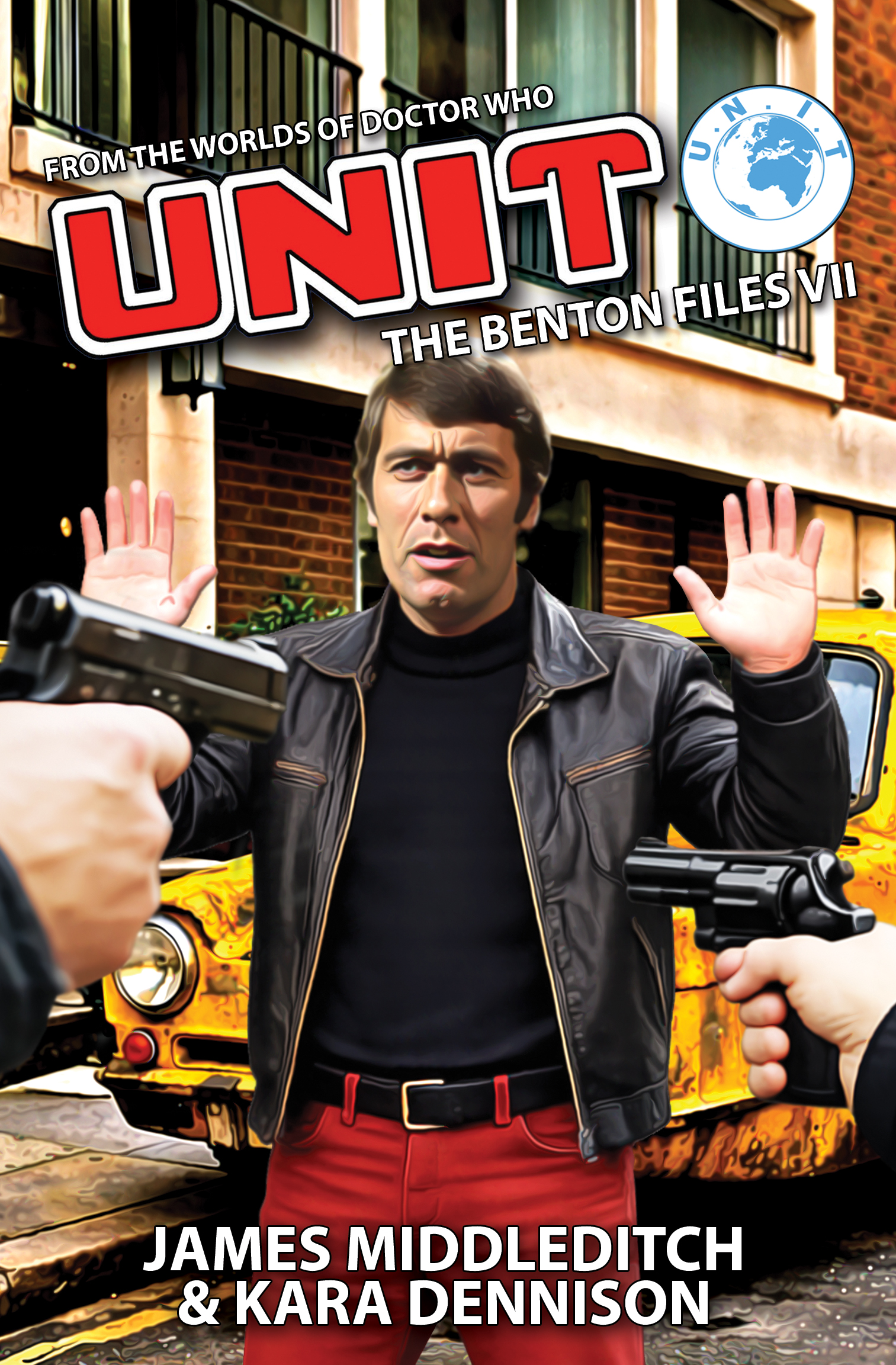
  • UNIT: The Benton Files 7

    My first foray into the UNITverse is now available for pre-order! Pick up a pair of linked stories by yours truly and James Middleditch. Mine, titled "Wiltshire Drift," follows a retired Benton through the countryside in search of a car with some serious alien power under the hood.

  • NEW FICTION: The Whole Beast

    My new flash fiction piece is now available to read free on Dream Theory! Even in a world overrun with kaiju, sometimes spite is still the best motivator.

Showing posts with label ttrpg. Show all posts

Friday, June 5, 2026


As much as I love Dungeons & Dragons (because it was where I started) and Forged in the Dark (because of its story-forward style), I am a big proponent of trying as many different gaming systems as I can. There is no one "perfect" system, after all: where Forged/PbtA styles may champion story, they fall short when it comes to initiative. Where D&D is great for turning everything into trackable numbers, that degree of math can occasionally lead even the most story-centric player into accidentally metagaming. Discovering new systems with their own strengths is always a delight.

Thus, Fabula Ultima.

I was invited to join an ongoing campaign run by Crunchyroll coworker and magnificent podcaster Paul Chapman, who also ran some previous campaigns I enjoyed. With a little extra time on my hands, I figured I'd go for it, at least to see if the existing party and I got along. And, just as importantly, to see if I got along with the system. It's based heavily on classic JRPGs, with a few twists that make it conducive to extra collaboration between GM and player.

It's a game we play intermittently, so we're on downtime as the players play something else for a few weeks, which gives me time to consider what I think so far. About the system itself, I mean. The party is rad.

Again, thus:


Wow, the character construction is amazing.
The first thing I learned about Fabula Ultima is that you can legitimately build pretty much any character you want to. Unlike D&D and other systems, species/race has nothing to do with the mechanics of your character and is purely cosmetic and/or narrative. More emphasis is placed on classes, and every character will automatically multiclass.

Since this was a new system to me, Paul and I quickly decided that something of my "usual style" would be the best way forward. I imagined a vampire dilletante who, bored of immortality, became a phantom thief. (Any close friends will be rolling their eyes at this point, but give me my fun.) I ended up with an entropist/rogue, combining stealth and thievery with magic that bends reality and luck to her whims.

The rest is similarly straightforward. The main book has tons of special items, as well as easy ways to homebrew signature weapons. And if that's not enough, there are at least three expansions that add more range to what your character can do or wield. At one point, we even toyed with me playing the Doctor, given the very specific quirks for stolen vehicles and not being "of this world" that would combine seamlessly to make that happen.


The player asks for rolls.
Something that's taken a lot of getting used to, but that I don't necessarily dislike, is the idea that the players say which rolls they'd like to do. Due to the types of games I usually play, I'm used to outlining what it is I want to accomplish narratively, then letting the DM/GM piece together what I ought to roll. For example, one long-running D&D character of mind has Bonus Action: Study, which she uses at the beginning of combat to get a read on whatever the party is fighting. But whether that's an Arcana, Nature, or Insight check may not be something I can discern on my own.

In Fabula Ultima, however, rolls are treated more like actions on a JRPG navigation screen. Your character has four base stats: Dexterity, Insight, Might, and Willpower. Each stat has a certain sized die attached to it, with stronger stats having higher dice, and are rolled in pairs (with itself or another stat) to take actions. For example, a physical attack might be Dex + Might, while a Study roll might be Insight + Insight.

While there's naturally still going to be discussion on what a roll entails, it's apparently the Done Thing in Fabula Ultima to dictate your own rolls as you might, say, click an option in a video game. I'm still getting used to this, but with the vibe of this system, it makes sense.


Strategizing is fun.
I'm not a huge strategist when it comes to tabletop game combat. I'm more about social engineering. And it's not because I don't like combat strategy; it's more because I'm just not all that good at it. I'm bad at numbers, mainly. If I'm playing a character who's a strategist, I will attempt to make exceptions, but I know where my weaknesses are. The only time I've been any good at it is seeing where subclasses "click together." Things like multiclassing to stack Sneak Attack and Divine Smite.

The thing about Fabula Ultima is, while I guarantee there's strategic stuff to be done with the numbers side of things, there's a lot of that "clicking together" type strategy thanks to multiclassing by default. When I pick new abilities while leveling up, it's very easy to look at how things are worded and see when and why I could use certain things. For example, an ability in one class that lets me heal a player when they go directly after me in initiative can be triggered by an ability in another class that lets me move a player up in initiative. So building a character that both works and is fun to play feels a bit like assembling a puzzle.


Fabula Points!
Okay, here's the Fun Part: Fabula Points. I'm (as you might already know or have guessed) a big fan of any mechanic that allows for a twist in storytelling. Players earn these points via various narrative scenarios, much as one might earn experience in Blades in the Dark and Tales from the Loop. Spending them, in turn, translates to XP for everyone at the end of a session.

There are several ways to use FP, including boosting rolls through character bonds and activating special class skills. But my personal favorite use for them is to directly alter the story. Obviously this is at the GM's discretion and can't be used to force other player characters into things. However, it can be used to build on what's already there or turn things to your advantage. For example, you could throw down 1FP to say you have a necessary contact or item.

The example I was given before joining the campaign actually comes from the campaign itself before I arrived. The party was stealing an airship late at night, and the GM described the night as being lit by a bright full moon. One player spent 1FP to say it was cloudy, actually... thus ensuring no one could see them clearly.

In short, Fabula Points are two things I love rolled into one: rewards for committing to the story even in the place of failure, and a tool in the players' hands to turn the tide.


Some downsides (but not really).
Any "downsides" I currently see to Fabula Ultima are either a "your mileage may vary" thing or a matter of learning curves. Initiative always seems to be a sticking point in games, as so many people want to reinvent the D&D wheel but we haven't really found things that work better. (My personal favorite so far has been the use of Momentum in Star Trek Adventures.) In Fabula Ultima, it's more like (as ever) a JRPG. Initiative goes back and forth between teams, and it's a group roll on both sides to decide who starts. Characters like mine can use abilities to shake up initiative, either by getting in the equivalent of a surprise round or moving up a teammate directly after them. But by and large, imagine your little sprite sliding forward to throw a spell and then sliding back. It's not bad, but it's not my favorite.

A lot of the crunchier numbers also take some learning. As much as I love the more modular aspect of character building, keeping HP, MP, and IP straight can take some time. Similarly, figuring out how stats go together to build skills can be a tricky one.

But again, those are small things, and they don't cancel out how fun and frankly vast this game is. I am a sucker for anything that lets you experiment and worldbuild and collaborate, and the vibe of Fabula Ultima genuinely lends itself to that.


In short, if you love classic Final Fantasy and games like it, and you love fine-tuning characters whose powers exactly reflect the image you have of them in your mind, this is a great one. There's a Celebration Edition currently taking late pledges on BackerKit, so go grab a copy if you feel so inclined!

3:00 AM   Posted by Kara Dennison in with No comments
Read More

Wednesday, July 16, 2025


It's been a solid three months since I last weighed in on my Girl by Moonlight experiences. The game continues every other Sunday evening. I haven't quit, I've kept enjoying it, and (apparently) my players continue to enjoy it as well.

That said, I think there was a part of me that believed I'd hit a point at which I'd "understand" GMing and then we'd just roll from there. Which of course is foolish — that's not true of anything anywhere. In retrospect, I think it's because I witness a degree of confidence and creativity from the GMs I admire (in my own life and onscreen) that I just figure they've hit that point.

Then again, I'm sure there are people who are convinced I am a confident and self-assured writer just because I have books in print. And boy do we all know that's not true.

The big thing I've noticed is that I never go to bed (because these games end at 10 or 11pm for me, so I go straight to bed) thinking, Damn, I nailed that one. Well done me. There's always something: I paused too long here to come up with something when a player went in an unexpected direction. I didn't define a point well enough, or make it enticing enough, to send players after it, and instead we went on a long rabbit trail to get to what I thought was a straight-line result. I fumbled here or here during combat. I forgot the rules here; I fudged the rules there.

It's like when I used to act. It's like when I write now and hit "Send" on the draft. There's always, always something I could have done better. Which is kind of a crappy feeling when your brain is running counter to what your players are saying. But it's also a bit reassuring: it's another way that GMing is like the style of writing I'm accustomed to. And the truer that is, the less alien it feels.

In fairness, it's not all double-edged swords. I like to think I am picking up tricks along the way. Friends have been helping me tackle aspects of the game mechanics that are rough for me — things like how to guide combat and know when a combat is "done" in a system bereft of NPC hit points and initiative. But I've also had to tackle things that are more "quality of life" for the player... things they want that are both narrative and mechanical in nature.

For example, this particular playbook of Girl by Moonlight, "On a Sea of Stars," has giant robots. As with fellow player characters, you can have Links with your robot (or Engine). Links let you shake off stress, get an extra die, and other such abilities. I will occasionally have the players do feet-on-the-ground missions, either because it fits the story better or as a bit of a challenge. Technically, this means that they don't have access to Links with their Engine. But they have expressed wanting them.

I didn't like saying a flat-out "no," because everyone in this game is doing amazing things with their characters and it doesn't feel like a desire to optimize solely for the sake of optimization, so the task became figuring out a way to make it both narratively and mechanically feasible. How can I create long-distance links between pilots and their mecha while still making it clear that they're more vulnerable out of their robots? To that end, I'm homebrewing items that require gathering materials and finishing projects. When complete, these items (I'm still deciding what they are) will enable use of at least one link per combat, with an increasing risk of the item "burning out" after each use in a single session. (I took inspiration for this risk from the Arcanist's Lens, an item from the Griffon's Saddlebag.)

It's also worth mentioning that getting to the point of making them required some actual "talking" with the Engines: getting to know the personalities inside these machines. (I can't say much more because I'm pretty sure all my players read my blog.) With these moments under the characters' belts, it felt much more likely that this long-distance bond could exist — and, moreover, that it was something the players would actually play narratively, rather than just using to boost a dice roll.

Just the other night, I had to make my first ruling between two conflicting player decisions. Fortunately, it wasn't a dire matter. One player was about to make an Eclipse roll ("Eclipse" being a mechanic where the character's darker, more vulnerable side is explored), and it was very very clear that this player wanted to go there. However, before making an Eclipse roll, another character can prevent it by taking on stress themselves. Player 1 was pushing for the Eclipse to happen during the Fallout phase, as cumulative stress is wiped at the end of each session and it might be a while before this opportunity would come again. Player 2 is playing a character who not only hinges on communication and understanding due to their playbook of choice, but also has a Promise (an interpersonal mechanic) dedicated to helping this specific character.

Letting Player 2 intervene would have meant not letting Player 1 have a specific moment that, by design, could (and probably would) come again. Not letting Player 2 intervene would have meant artificially closing off an aspect of the game's mechanics and denying Player 2 the ability to act according to their character's nature — which is an even bigger deal in a game where experience is primarily gained by doing exactly that. In the moment, I chose to let Player 2 intervene. Player 1 and I talked about it later to ensure everything was okay, and I revealed Player 2's Promise over the table to explain why I chose the way I did. Even when I knew I was making the best choice as the GM, I didn't enjoy not letting a player do something they were gunning for. (I'm a very narrative-driven player myself, so I get it.) However, the player ultimately agreed with me that it was the best choice, especially after re-reading what Eclipse looks like for this playbook and realizing that they were actually acting opposite to it. While there's still a very real desire to explore the Eclipse mechanic, we both agreed that it should be both narratively and mechanically next time, and not just a build-up of stress points on the sheet.

For what it's worth, I'm fortunate that the first conflict between two player choices was between two long-time friends over something that ultimately had a pretty clear ruling by the book. I've seen, and been part of, much less clear-cut conflicts. I'd like to think I'll handle them well when they arise, but I'll still count myself fortunate that I got to come in on the ground floor with mitigating this sort of thing.

There's now a longer gap between this session and the next one as one player goes on vacation, meaning I get more time to plan. Do I feel confident as a GM now? No. I don't think I ever will. Do I enjoy the process? Absolutely, and a lot of that is down to building a group of players that I know will both work with me and occasionally test me. I still struggle with split-second decisions, and I still hate knowing those long pauses exist while I'm cooking something up to account for an unplanned side road. But even if I do go to bed at night feeling uncertain, the amazing things the players are doing make it worth it.

3:00 AM   Posted by Kara Dennison in with No comments
Read More

Wednesday, June 18, 2025


 No matter what anyone tells you, you don't need generative AI to help you build a game setting. All you need is some human collaboration—or, failing that, a creative jump-start from James D'Amato.

I've reviewed so many RPG tools from D'Amato here on my blog, from storytelling games to book that help you build a fully fleshed-out character. His latest contribution to the GM's toolkit is The Ultimate RPG Worldbuilding Deck: a set of cards that can be used alone or collaboratively to add details to your campaign or setting.

At the moment, as many of you know, I'm running a Girl by Moonlight campaign. As my players are about to go somewhere new and meet several new people, I figured this was a perfect opportunity to put the latest deck to work. For the purposes of the single session coming up, I pulled two cards from each of the five categories: People, Places, History, Rumors, and Institutions. Since I had a fairly solid idea of where these new elements would fit into the story, I allowed myself to switch out cards if something simply did not fit.

Each card gives you a heading that dictates what this person, place, or thing is. A Thief. A Sad-Sack. A Burial Site. An Accord. And so on. Underneath that, on the top half of the card, is a set of fill-in-the-blank or multiple choice questions. You don't have to create anything whole-cloth for the questions at the top. If you're stuck, you can flip a coin or roll a die to fill in answers.

Once that first half of the card is done, the second half then asks a series of questions based on what you've decided. This is where it's time for your own brain to tick over. But even if you're feeling a little blocked or uncreative, there are two things that make this easy. First, the questions generally start by stating a fact and asking you to elaborate. For example, rather than simply asking "what is this NPC like," the card might tell you that the character has a false exterior, then ask what they are hiding beneath it.

The second thing that helps is that every card asks two questions about how this new story element relates to a PC. For example, which PC does this character become fascinated with? Or, which PC has extra expertise that helps them adapt to a certain new place? I found that, by imagining my group in action, I had more ideas at the ready. This also serves the purpose of ensuring that every new addition serves the party and gives at least one player a chance to shine.

As a multiplayer experience, it's a bit like The Quiet Year, albeit without the mapping element. As players draw cards, they bounce ideas off each other, slowly creating a world that builds on everything that's come before. Much like D'Amato's Oh Captain, My Captain!, this feels like it could also be a great warm-up when played with fewer cards. If you happen to be GMing for a game that encourages collaborative worldbuilding, this could also be a way to get ideas flowing.

I have yet to encounter something from the Ultimate RPG Series that disappoints. Everything I read or play goes directly on my gaming shelf, if not directly into my gaming bag. This series has measurably improved my gaming experience both as a player and a GM, and this in particular is a tool I'll be pulling off the shelf on a regular basis.

The Ultimate RPG Worldbuilding Deck is now available from Adams Media.

3:00 AM   Posted by Kara Dennison in with No comments
Read More

Wednesday, April 2, 2025


A while back, I mentioned I'd be taking a crack at GMing properly. I've made small attempts before, but my campaign of Girl by Moonlight: On a Sea of Stars is my first time really digging in and doing my damndest. I've got a great group of players and... well... I also love this system.

Besides just wanting to run a cool game for friends (two of whom are Forever DMs themselves, two of whom don't get to game as much as they'd like), I also wanted to start actually learning how to run games. I'm four sessions in, with many more to go, and there are a few things I've picked up so far. Old news to you old hands out there, I'm sure. But maybe there's someone who, like me, could use some encouragement and a look at the basics.


GMing Also Means Teaching


The only games that are "easy" are games that are designed to be easy (I'm thinking of Grant Howitt's amazing one-page games, which are great for beginners). No matter how good a game's structure is, or how much it feeds into what you and your group want to do, it still has to be learned. A part of GMing I never expected was the teaching aspect, but in retrospect, it's pretty obvious, isn't it?

Girl by Moonlight has a lot of moving parts, and plays with the Forged in the Dark system in interesting ways. For example, everyone gets stress from personal obligations at the beginning of a session, and that stress is wiped at the end (with certain exceptions).  Links are also used as a sort of interpersonal inspiration token: take time to get to know your teammates, and in return they can offer you free assistance in combat. In fact, a lot of this system runs on what you're willing to do for others. Healing can only be done by someone else helping you, for instance.

In retrospect, I sort of wish I'd gone the route Luke Westaway did in Oxventure Presents Blades in the Dark. He introduced some of the crunchier mechanics slightly later in the campaign's run, allowing the players to get accustomed to the basics. That said, I've been finding my own ways to teach the system. While NPCs with sheets aren't a thing in Forged in the Dark games, I used a fan-made support playbook to create a sort of DMPC. The way she's built, both mechanically and as a character, I can use her to demonstrate how to get the most out of what's available.

I've also taken to turning references into "tokens" on Roll20, placing them within view but out of the action. That way, players know at a glance what Links can be used for. It's very much dependent on the group, I suppose, how you teach a system. But between the Roll20 integration and making things readily visible to everyone, I think I'm getting there.


You Can Say No to the Book

Rules exist for a reason: to make games fair and fun. But if there's something in a book that just doesn't suit anyone, and it's not at the core of what the game is or how it's played... it's okay to do away with it. Case in point, Girl by Moonlight's stipulation that campaigns "start during the second season." I understand that generally: it allows players to know each other, build up the Promises that will help them dictate their action, and jump straight into the "good stuff."

Except... to me? The introduction is a major part of the "good stuff." So no, we started at episode 1. And I did the series design privately, working in elements that I knew the players would enjoy. That meant making a few tweaks, like having players set up their Promises after session 1 and altering when and how players first formed Links with their robots. But it's been worth it.

Similarly, I have one player playing the Enigma playbook. Generally, character info is supposed to be readily available over the table—and I do trust these players not to metagame. But the player requested that there be a period of time in which the mystery can be built up even to the players. Is this accounted for in the book? No. But who cares? To that end, we set up a clock that is ticking down based on rolls and events in the game. This means that a lot of mechanics are temporarily off the table. But for the fun of the mystery and the inevitable big reveal? It's worth it.


I'm Still a Player
Kiiiiind of. It's hard to explain.

Like, GMing is hard. It really is. It's a fun kind of hard—I'm writing on the fly, and I don't get to go back and edit. Ideas get thrown at me that aren't mine, and once in a while I see two that fit together and they make something new, and then I get to integrate it next week. But spinning all those plates is tough, and I'm still getting used to keeping them all in the air.

That said, I don't feel disconnected from the players. I may be the one calling most of the shots, but it feels like we're all here doing the same thing. We're all at a party, I'm just the one cooking dinner. Doesn't mean I don't get to enjoy the dinner, too.

Keeping that mindset—that we're all here for the same reason, that everyone is throwing their creativity down on the table—helps me get over that constant fear that I'll disappoint everyone or make a bad game. But at its best, I don't feel like anything's changed. I'm not against the players, even if I do throw them challenges. When I do the Mission phase, I have a few conditions laid out for what can or should happen. But I don't necessarily stick religiously to those conditions. If someone does something cool that makes complete sense for the scene, so be it: we follow that. I described the Mission phase as a game of chess between me and the players. There's not a stat block with HP, there's just a scene. Once they've outwitted me in a way that I can't help but love, they've done it.

The main thing I've learned, though, is that I want to keep GMing. I also want to keep playing, of course. But I think I like this. All I want in life is for the things I create to bring people joy. And where I initially thought GMing would force me to confront embarrassment and failure in real time, it's more like I'm getting to see something I made—something I am making in the moment—hitting home for people. Ain't no way I'm giving that up anytime soon.
3:00 AM   Posted by Kara Dennison in with No comments
Read More

Wednesday, February 19, 2025


My first outing as a GM has given me perspective on a lot of things. The biggest of those is that I always want to offer my players the sort of game I'd be excited to be in. Whether that means hiding potential subplots throughout the setting that I know certain players will like, working with them to homebrew a mechanic, or spending several hours creating individual tokens for a hangar full of giant robots—those things are worth it. So I've started taking even greater notice of accessories that enhance a gaming experience: not just as a player who'd like it, but as a GM who'd like to offer it.

The Düngeonmeister series has, frankly, offered so many things that enhance play that even I can't keep track. Their latest, The Düngeonmeister RPG Sticker Book, initially just seems like a bit of fun for TTRPG fans. But for all the purely entertaining stickers scattered throughout, there are also actual useful tools scattered throughout.

While the Düngeonmeister team of Jef Aldrich and Jon Taylor heads this book up, the star of the show is the artwork of Kristin Ousley. The front of the book is loaded with character and monster art—perfect for players (or GMs) in need of a quick visual reference, or even for inspiring character looks for newer players. There are also several treasure and armor stickers in a variety of designs, great for handing out treasures and upgrades after a big mission.

My favorite part of the book, though, is the back: where all the utility stickers are. There are stickers for conditions, effects, and advantage/disadvantage—both in print and more cartoony. Best of all, at least in my opinion, is the ability to build a little "crest" for your character. Several pages of stickers indicating class, species, and alignment fit together to make a banner. The species and class stickers have multiple designs as well, meaning you can mix and match images to really embody your character.

There is really only one downside to this book: the stickers are so adorable, you won't want to use them! That said, $16 is a nice price for 500 very useful stickers, so having a couple copies under your belt for a campaign can't hurt. If you're a GM, they're a great way to bring moments to life on the page of your most studious notetakers, or add a bit of flair to your DM screen. If you're a player, they're a great way to accentuate your character notes and diary, adding vivid visuals to their adventures.

The Düngeonmeister RPG Sticker Book is now on sale.

Check out my reviews of other titles from this series:

3:00 AM   Posted by Kara Dennison in with No comments
Read More

Wednesday, January 8, 2025


It will always strike me as a little ironic how the people most fearful of judgment tend to go into creative fields. Of course, it's also because many of us are so desperate for validation when it comes to our creative work. It means a lot to me when someone reaches out to me and says they enjoy my writing; at the same time, being in the same room while someone reads something I've written is nerve-wracking. Back when I still did acting and improv, that immediate feedback felt good. It's different when it's writing.

Gaming straddles the line between that. As a player, it feels like improv. But running a game is somewhere between that and, you know, writing. And while I've always wanted to run games on occasion for my friends, I've also been terrified to. I've given a lot of different reasons, all of which are true to some degree. I'm worried I can't "Yes, and" fast enough at a group. I'm worried I won't be able to manage all the mechanics of a game rather than just one character sheet or playbook. But let's be real: the real reason I'm afraid of GMing is because I'm terrified that my story and setting will suck, and I'll have to watch my friends be bored and disappointed in real time.

But that's something I'm gonna have to get over, because I've committed to running a game for a small group of friends. Womp, as they say, womp.


My system of choice is Girl by Moonlight, a Forged in the Dark system published by Evil Hat. I generally like Powered by the Apocalypse/Forged in the Dark games already, as I've mentioned elsewhere, because of how much focus is put on actually embodying your character and their role in the chosen genre. (I also love advancements being a product of risk and/or failure.) GBM has the bonus of being a genre-savvy magical girl system with multiple "playsets" to make it lean in whichever direction you prefer. Friend/regular GM/housemate Phoenix is currently running a game using the "Brink of the Abyss" playset (for your Sailor Moon type stuff), and I've been enjoying how that game flows.

I'll be using the "On a Sea of Stars" playset, which mashes up magical girl tropes with mecha and space opera. That is, as has been mentioned, pretty much perfect for me. The system is relatively easy to learn, especially considering the time I've spent watching Oxventure's Blades in the Dark. The pacing of the campaign (or "season") is actually quantified using meters and dice rolls. You start players with one of two types of missions. Once a certain meter gets to a certain level, you move up to a different tier of mission. What the main threat is depends on those meters.

The nerves have been nervy, even though my chosen gaming group is three (perhaps four) very close friends who I trust to both challenge and support me. I have a setting and a story I'd like to tell, and so far the response to the little intro I wrote up has been good. It's nice to see people getting excited to build characters in a setting I made (or, more accurately, am making). It's kind of the same feeling I got when I saw other Forgotten Lives writers absolutely nail my Morbius Doctor's character. It's like being seen and understood, in a weird way.

While the anxiety is still there and likely will be until I rip off the Band-Aid and run the first session, I did have something of a Eureka Moment as I was piecing things together via the system and the playset. If you've seen GLOW, imagine the moment Debbie realized that pro wrestling is a soap opera. That was me, realizing that (at least for me) a game guide is a series bible. I'm used to working with those because of my work with Obverse (and some upcoming stuff): guidance for what you should and shouldn't do to align your own original story with the constraints of the sandbox you've been given. Once that hit me, the planning side felt a little less daunting. I'm not "learning a system" anymore: I'm consulting a series bible. And I'm an old hand at that.

It's a little awkward to admit to anxiety about GMing when so many people do this as, like, kids. I've tried it once or twice, always short-form. Once it just ended badly because I didn't know how to do it; once was to beta-test a game and it was still messy because I still didn't know how to do it. But now, between games I've been in and games I've watched, I've had so many good examples of chill GMs and supportive players. This is pretty much the only capital-R Resolution I made for 2025. I will report back on how this goes, both how I like running GBM and how the game itself goes, if I survive.

3:00 AM   Posted by Kara Dennison in with No comments
Read More

Wednesday, October 23, 2024


Oxventure is pretty much the only actual play channel I have time for, but it's absolutely worth it. After a seven-year run on their first campaign, they're doubling down with Wyrdwood: a folk-horror flavored series using this year's updated PHB. And a lot of homebrew.

Some things are small, such as Cressida Blackwater being a homebrewed human-elf despite the recent nix on half-species. Others play into a core aspect of the campaign: Magic Has Gone Very Wrong. And, as the game itself often reminds us, magic will have its due.


The Story


I can't recommend Oxventure: Wyrdwood enough. It's one of my favorite things this group has done, even as a long-time fan of their original campaigns and side stories. The best way to get a feel for what's going on is to see it for yourself. But for a quick start—or to weigh up whether this will be your bag—here's the story as it stands:

The campaign's setting has had three eras. The first was one of giants. The second was of wild folk: fantasy races like elves, dwarves, firbolgs, and aasimar. Now humans are commonplace, with some of these wild folk living among them. Magic is also common, and makes up a large part of the world's infrastructure. If something were to go awry with magic, it would make a big mess. And it has.

Two months ago, magic became unpredictable. It can be used, but when one least expects it, there will be terrible consequences. As part of a group seeking out answers to this problem, five people have become unlikely allies. Lug (Firbolg Wild Heart Barbarian) is a passive-aggressive forest guide trying not to be killed just for being a Firbolg. Happen (human Swarmkeeper Ranger) hails from a group who worships Cadence, a goddess who delights in extremes of luck—good or bad. Willowfine (Aasimar Life Cleric) is a healer trying to protect her people's connection to traditional magic. Cressida Blackwater (human/elf Illusion Wizard) is a banker cursed with ram's horns forced to share space with inferior party members. And Robin Oatcake (Human Commoner) is a normal man.

Telling any more about the story or characters would give away some fantastic reveals. Again. I highly recommend you watch it for yourself. But the magic—and how the dangers of using magic are replicated in gameplay—warrants discussion. Because it's expertly done in multiple ways.


The Cadence Die


As Happen, Luke Westaway can occasionally avail himself of the Cadence Die: a custom-made d20 that has a 50% chance of rolling a crit (25% success, 25% fail). You can have a look at the design and the die up close on Luke's Instagram.

The Cadence Die can be used a number of times equaling the character's Proficiency Bonus per long rest. Narratively, this represents the Swarmkeeper Ranger's swarm (in this case, pixies) intervening, for better or for worse. There's a markedly higher chance of rolling a 20, but also a markedly higher chance of rolling a 1. And rolling the Cadence Die comes with complications. If you gamble and you lose, you lose hard.

As a player, I'm more narrative-focused: rather than statting out a good character and then figuring out how to make them work narratively (which I also think is awesome), I like to come up with my concept and then figure out how to make the numbers reflect those narrative choices. This die is a fantastic one-two punch, encompassing both the fickleness of the pixies and Happen's own dedication to extremes of luck. So narratively this is extremely satisfying.

It's fair to note that Luke has stated that his favorite way of making characters is to focus on one thing and do it really well. In the original Oxventurers Guild campaign, Luke was also excellent at playing along with failures or crit botches, so this kind of all-or-nothing luck (with just enough mid-tier luck to disappoint Cadence 50% of the time) works well with both his preferences and his strengths.


The Rolling Rite


Having played some Warhammer Fantasy before, I've seen (if not personally experienced) magic with consequences in game. In that system, it comes of rolling double (or God forbid triple) numbers on your dice. Even if you succeed, something will happen. In Wyrdwood, consequences have been turned into an rather genius end-of-show ritual termed the Rolling Rite.

Whenever someone casts a spell in game, they earn a point of debt. Everyone starts at 1, so even if you're not much of a caster, you're not fully safe. At the end of the episode, everyone rolls a d100. If a players rolls their number or lower, they receive a sealed envelope, which they will open next time they cast a spell. This contains some sort of consequence inside. After receiving an envelope, your debt is halved—it never goes all the way down again.

It's a great way of handling the concept of debt, and not just from a showmanship standpoint (although that is very good). The balance between luck and player choice—debt could hit at any time, but it's more likely the more you use magic—is a nice way to leave debt enough to chance without making it fully RNG. And, you know. There's something to be said for knowing over the table that the Debt is coming.

Homebrewing things that translate to story beats while also keeping the game fair and manageable is tough. I know that firsthand. But Wyrdwood is doing an excellent job of sinking a popular system as much into The Horrors as possible. And if you're not already watching, you should be.


3:00 AM   Posted by Kara Dennison in with No comments
Read More

Wednesday, September 25, 2024


I am a child of the 80s and I grew up on sci-fi. When that's your background, Amblin and the like are kind of in your DNA. So games like Tales from the Loop absolutely appeal. Set in "the '80s that never was," this nostalgic adventure game casts players as a cast of adventurous kids and teens getting extremely involved in the strange happenings around a particle accelerator simply called The Loop. It's a great setup with a lot of promise and a lot of room for characterization. And then... some issues.

Before we start, a few notes about me and how I interact with tabletop games, since I'm noticing I'm starting to get a few more readers of late. Unless otherwise specified (and probably not for quite a while), I am a player in any games I review, not the GM. But I do always talk with the GM about what their experience was, because that's important to me, too. In terms of play-style, I'm narrative-forward—not because I think that's the "right" or "superior" play style (I think anything that lets you and the rest of the table have a good time is the "right" way to play), but because that's just personally how I vibe. I build a concept within the setting I'm given, then match the numbers to that concept, even if it's not "optimal" and even if it will make it harder for me to succeed. I do always make sure I have at least one way to objectively help the party, though, because this is a team sport.

All that is a very long way of saying I seek out, and enjoy, games that attempt to marry narrative more smoothly to mechanics. And I think because I seek those out so regularly, I get to see a lot of examples of how people try to make that happen, how it succeeds, and how it fails.


There are a lot of things I like about Tales from the Loop. A big one is the choice to really lean into tropes by way of playbooks/classes. This is something I enjoy about both Powered by the Apocalypse games and Free League Games—and honestly any system that cares to try it. When you're setting a game within a genre or a subgenre, one way to really root yourself in what you're doing is to know what the common characters are and how they benefit the party. It also gives you touchstones in that early character creation process, and (if designed well) it doesn't hold you back from putting your own spin on that character trope.

For example, I played the Jock. And while my character was all physical stats and very little in mental, it was because she was very agile (her sport of choice was sailing) and climbed through windows and into buildings with very little thought for what she was doing at any given time. That's the joy of a really good playbook. While more modular character gen (like that in 5e) allows for really nuanced builds, playbooks let you muck around with genre in a meaningful way.

Other things Loop does well—turning character traits into mechanics in a more straightforward way. While I enjoy figuring out how stats turn into story beats (How does rerolling for Luck look in combat? How does Advantage or Disadvantage look? Why is a seasoned adventurer only level 3?), I have a soft spot for any system that draws that straight line for me. Pride is one of those ways: once per session, you can cash in a personal belief of your character to gain a success.

I've explained this before when talking about Armour Astir and Blades in the Dark, but I value anything that rewards you for playing in-character. (I'm also gaining an appreciation for anything that has stakes when your values are challenged, but I'm still in the midst of an experience with a game like that.) I'm not against putting myself at a disadvantage to stay true to my concept, but it makes me happy that doing this functionally helps the group as a whole.


The major downside of Tales from the Loop is more in the pre-fab campaign we played. The feedback I've gotten from multiple GMs is that this is a great setting that requires a bit of additional work. In the longer game I've finished, we worked from the pre-written campaign. However, this required a lot of patching up and changing along the way. It wasn't as egregious as the issues with Lost Mountain Saga, where keeping the plot moving required players to actively shelve their knowledge of the fae and their personal motivations in favor of narrative causality. It was more the amount of legwork required to bring the characters into some of these stories.

I will admit, I generally play characters who are more than ready to throw themselves face-first into anything even remotely interesting. That's just the kinds of characters I gravitate toward, either at a table or when writing a story. But you can't expect everyone to always play that kind of character. I also understand that a pre-fab campaign can't account for every potential stake for characters the writer will never meet. However, the issue with Tales from the Loop seemed to be that many of the narrative hooks weren't really wanderable-innable, even for the most nosy and motivated kid.

In terms of pre-fab campaigns, I believe that creating motivation is a shared responsibility across three sets of people. First, the player has to create a character who can be engaged in the action. Even if they're reluctant, there has to be something that can be invoked to pull them along. Second, the GM has to hold out a metaphorical hand for the player to take. It's not on them to motivate the characters, but it is on them to meet them halfway; they don't have to drag them up the cliff face, but they should at least scatter some handholds around. Finally, the writer of the pre-fab campaign needs to make a story that can be hooked into by a sufficiently motivated group. Again, they don't have to drag the party up the cliff face, or even put handholds in the cliff face, but there ought to be something at the top that makes the cliff face worth scaling. Often, it didn't feel like there was anything to interest young protagonists, and the only fire burning under a player's ass was the urge to find the next story beat and see if it jogged anything. Our GM did a great job manufacturing these hooks, but there was a lot of progression that amounted to "You ought to just decide that this is a good place to go," which can ruin the pacing of a game.

There's a more minor downside that's a little more system-based, which is that healing from damage takes a weirdly long time and can require a lot of moving parts that don't click well with how the story moves. Don't get me wrong, I love how damage works on a basic level. You have "conditions" (some physical, some emotional) that you take when things go wrong, or to push yourself and reroll. These conditions affect your ability to roll well, and if you take them all... well, kids don't die in this game. Remember, this is 80s sci-fi adventure. But you have to go to specific people and places and spend several hours recuperating. Fine for downtime, difficult for fast-paced action. In our test campaign, we homebrewed around this.

In the end, I love the aesthetic, the concept, and the feel of Tales from the Loop. But I feel it's a system to be altered, homebrewed, and referenced. The character building? Great. The setting? I think it's more meaningful if you move the placement of the local Loop to a place meaningful to the party. (Really tweaks the nostalgia to play in your hometown circa 1987 rather than a place no one has been.) The pre-written campaigns? Some interesting elements (I loved the microchipped birds), but again, better to homebrew.

Tales from the Loop is frankly a game that's better the more personal you make it to your players. To that end, I highly recommend the system in general, and aspects of the setting, but I would also encourage any interested players to do a bit of customizing to bring out its real charm.
3:00 AM   Posted by Kara Dennison in with No comments
Read More

Wednesday, September 4, 2024


Thanks to Simon & Schuster for sending these samples!

I love building out my TTRPG library—but there was a point at which I realized that building out that library means more than having a bunch of modules and guides. It was around the time I read How to Defend Your Lair. The thing is, anyone can DM and anyone can play, and that's the beauty of it. But for people who do want a bit more, there is more.

On September 24, we get a one-two punch of TTRPG library must-haves. One is for roleplay, and one is for fun.


The Düngeonmeister Book of RPG Trivia
By Jef Aldritch & Jon Taylor
Available September 24

I've loved the Düngeonmeister book series ever since friend and collaborator Rob mixed us up themed drinks at one of his monthly games. The number of books I have to hand by Aldritch & Taylor is constantly growing, and each has made me (I like to think) a better player.

This one, though, is mainly for funsies.

This handy book serves up more than 400 trivia questions about RPGs and RPG culture. From the beloved to the obscure, from the games themselves to the media around them, this one is full of thinkers.

Since I got my copy, I've enjoyed pulling the book out before one of my weekly games and testing my friends at the table. Who was the rogue who died at the beginning of the Darkest Dungeon Chick tract? What was Marlon Wayans's character's class in that one D&D movie we don't talk about? Which video games shaped the TTPRG industry? All that and more is covered in this book. Plus, there's "Critical Info" throughout, offering more details on especially bizarre trivia tidbits.

Will this book make you a better player? Probably not; but it's not meant to. Will it start some fantastic discussions at the table before and after games? Absolutely. And you'll find out why Gary Gygax spent his life on an FBI watchlist. And isn't that worth the price of admission on its own?


The Ultimate RPG Series Presents: Oh Captain, My Captain!
by James d'Amato
Available September 24

Whether I'm writing a story for publication or crafting an RPG character, one of my favorite ways to build them is by answering questions. It's how one of my regular groups starts every session, and it leads to some of the most intriguing plot points. Now imagine a short-form TTRPG where that's the entirety of the process. That's Oh Captain, My Captain!... and it's one of the most surprisingly satisfying one-shot RPG experiences I've ever had.

Each player is a member of a crew led by a bold captain. Only one thing is known about that captain: the crew trusts them implicitly. This small crew is accompanying the captain on a quest for a legendary treasure—and you also don't know what that is. Details about the captain, the treasure, and the characters at the table are revealed by taking turns answering questions. At the end, players come to a consensus on what the treasure is, what sort of captain they follow, and how they confront one final challenge once the treasure is in sight.

I played this game with Phoenix and Katy, the former being a local DM whose table I'm at fairly regularly, the latter of whom is usually at those tables with me. Starting out with nothing but one of the "Captain Cards," we ended up with surprisingly fleshed out characters of our own. Through pointed questions, Phoenix created a strait-laced former paladin who refused to execute the captain and was recruited into her crew; Katy created the captain's secret lover; and I created a young prisoner captured by another crew and offered freedom in exchange for help on this quest. We were all shocked at how naturally and quickly these characters arose through nothing but questions.

That said, the questions are extremely well written and lead to a series of follow-up questions in the group. For example, one card states: "The captain once confessed a regret to you. Why does this haunt you?" Note that the question is not focused on the minutiae of what that regret was (though it will come out while answering the question). Rather, it asks how the character was affected by the revelation. All the questions are like this, leading to insightful discussions.

If there is one issue with this deck, it's that the voting on the captain's nature is a bit too open-ended—to the point of causing confusing rather than encouraging discussion. The three options are "strong or evil," "weak or foolish," and "wise or righteous." Two of us voted the third; one of us voted the first. But we were all agreed that our captain was equally strong and righteous, but that the strength took priority. The best way around this is likely to have a discussion about your choices after they're made and figure out what each of you is really voting for.

Oh Captain, My Captain! is a fun game for people who enjoy character building. But it's also a fantastic exercise to help new groups learn to roleplay together. It demonstrates, in a contained game, just how quickly collaborative storytelling can bring a cast of characters to life. For longer gaming sessions, it's also a great warm-up to get your brain into that "yes and" space. This will not be living on my bookshelf; it will be living in my gaming bag, accompanying me everywhere. I am legitimately in awe of this game.

3:00 AM   Posted by Kara Dennison in with No comments
Read More

Wednesday, July 3, 2024


I finally figured out why this game sounded so familiar: "vaesen" is the term Grimm used to refer to its monster-people. Remember Grimm? It was on around the same time as Once Upon a Time during that big wave of "dark fairy tale" stuff? Anyway, that's not important, just something that's been bugging me.

Now, Vaesen the tabletop game hails from Free League Publishing, who have done several other cool titles I like. The concept is "Nordic Victorian fae horror," which is four words I like smashed together in a very appealing way. James Bojaciuk of 18thWall invited me and several others to play a test campaign for review purposes. And we all sort of ended up liking it a lot. Look for his review, and reviews from other players in the campaign, down the line. But this one is mine.

As a system, I like the majority of it. And the peripherals are a bit like the little girl with a curl: when they're good they're very, very good; and when they're bad... well, I'll get into that.


The Core System


I've mentioned in other TTRPG reviews that I really appreciate any system that has characterization baked into the mechanics. For example, PBTA games will tie leveling/progressing to making difficult rolls, failing rolls, or addressing your character's backstory or class while playing. In that vein, a huge chunk of the Vaesen character sheet is given over to characterization—not just your own, but how your character interacts with everyone else.

Each character has a Trauma and a Dark Secret that guides their bit of the story. And, as you're solving spooky mysteries with your group, you're encouraged to air out the group's Dark Secrets as well. This is a great mechanic and also encourages at least some secrecy at the table (which is great for players like me who enjoy less inter-party pre-planning). The down side to this is that, when your Dark Secret is discovered, you're encouraged to take on a new one. That's fine for a short campaign, but it can start to feel like your character's backstory is back-heavy or fragmented for longer ones. Some of the suggested Traumas and Dark Secrets are also a little iffy, but most of us came up with our own anyway.

In terms of actual mechanics, you're building pools of d6es for your stats and have levels of physical and mental harm (affected by attack rolls and fear rolls, respectively) rather than hit points. 6's are successes and 1's are failures. The presence of a 6 cancels out any 1's, but the absence of either can be read either as a failure or as a success with complications at the DM's discretion. A relatively easy system to get used to, with minimal math.

Players also get a base that they can build out over time using resources and points from doing missions. I really loved this aspect of it, as it presented little bonuses that helped everyone while also creating a setting for character-centric roleplay.


Mythic Britain & Ireland


This is where our campaign actually started, and boy was it great. Maybe it's because our group was made up of people who are already interested in the mythology of the British Isles, but this was such a good fit for us.

The book contains three playable mysteries and lots of resources for various beasties and creatures. If you're an expert on this aspect of history and mythology, you might notice a few things that don't quite fit into place. Regardless, the mysteries were really enjoyable and a good way to get our feet wet at the beginning.

The one downside is that there are occasional dead ends and red herrings during the information-gathering phase. These are fine in non-interactive fiction like books and TV shows, where the path to the finish is already set in stone. But when you have a group of people chasing down leads in real time, it doesn't really add to the thrill of the hunt to find out that you've been hitting your head against a brick wall for half an hour. Fortunately, our DM agreed, and would tell us outright if something was engineered to be a dead end.

Overall, this was a great introduction to the world of Vaesen, and I highly recommend it to anyone looking for a solid introduction.

Now, though—woe, Lost Mountain Saga be upon ye.


Lost Mountain Saga


It should be very telling that, at one point, we ran a timer to see how long it took until our group went in a direction that the campaign book didn't account for. (15 minutes, by the way.) While the conceit of The Lost Mountain Saga is super intriguing, the execution does not live up to the promise. Most of the action relied on the player characters going along with whatever the story wanted, even if it went against all logic. Simply to keep the game entertaining, our DM had to retrofit a lot of things. He would, however, read to us what was supposed to happen.

Now, I am a big believer that it's on you as the player to figure out why your character is here, and not on the rest of the group to convince your character to be there. However, there's a difference between embracing the flow of the story and, say, following an obvious cult into a forest, accepting food from them, and watching them kill a horse. Especially in a game in which you play a supernatural investigator. There's only so much narrative causality one can endure before one starts to wonder why this wasn't just a book instead.

The actual mythos of the expansion, which involves an archaeological dig and ancient Norse god-giants, got me really excited. It also made a great setting for our characters' expanding stories. But so many of the mysteries just felt... off. A man of the cloth attempting to bring back witch-burning and going completely unopposed in the era in which this game was set felt strangely out of touch, and yet it was still not the most out of touch thing in this expansion.

From what I understand, this expansion was based on an actual play podcast, which I have not listened to, so I can't comment on how it was transferred. All I know is that our DM did the absolute most to bring it up to playable standards, and that's the opposite of what a ready-to-play campaign book should be.

To sum up: Vaesen is a fantastic, atmospheric, character-forward TTRPG. It's so good that our party is looking to play more in the near future, even though the review process is over. It's so good that it's inspired characters we still talk about in Discord DMs. Mythic Britain & Ireland is excellent, and will be catnip for enjoyers of British folk horror and lore. The Lost Mountain Saga... is, I'm afraid, simply not good.

At the very least, I would recommend picking up the core book and Mythic Britain & Ireland. There are two other books of mysteries that we've yet to try, but the concepts intrigue me. I'm hoping our little group will band back together again soon to investigate them.

3:00 AM   Posted by Kara Dennison in with No comments
Read More

Bookmark Us

Delicious Digg Facebook Favorites More Stumbleupon Twitter

Search