New fiction, reviews, tea, and so on.
  • Celestial Toyroom Issue 553

    Purchase the latest issue of the Doctor Who Appreciation Society's official zine, or download a free copy! Read my reviews of the Fifth Doctor-centric CT annual and the new 15th Doctor book Spectral Scream. Plus, there's a review of my own Black Archive on Mawdryn Undead!

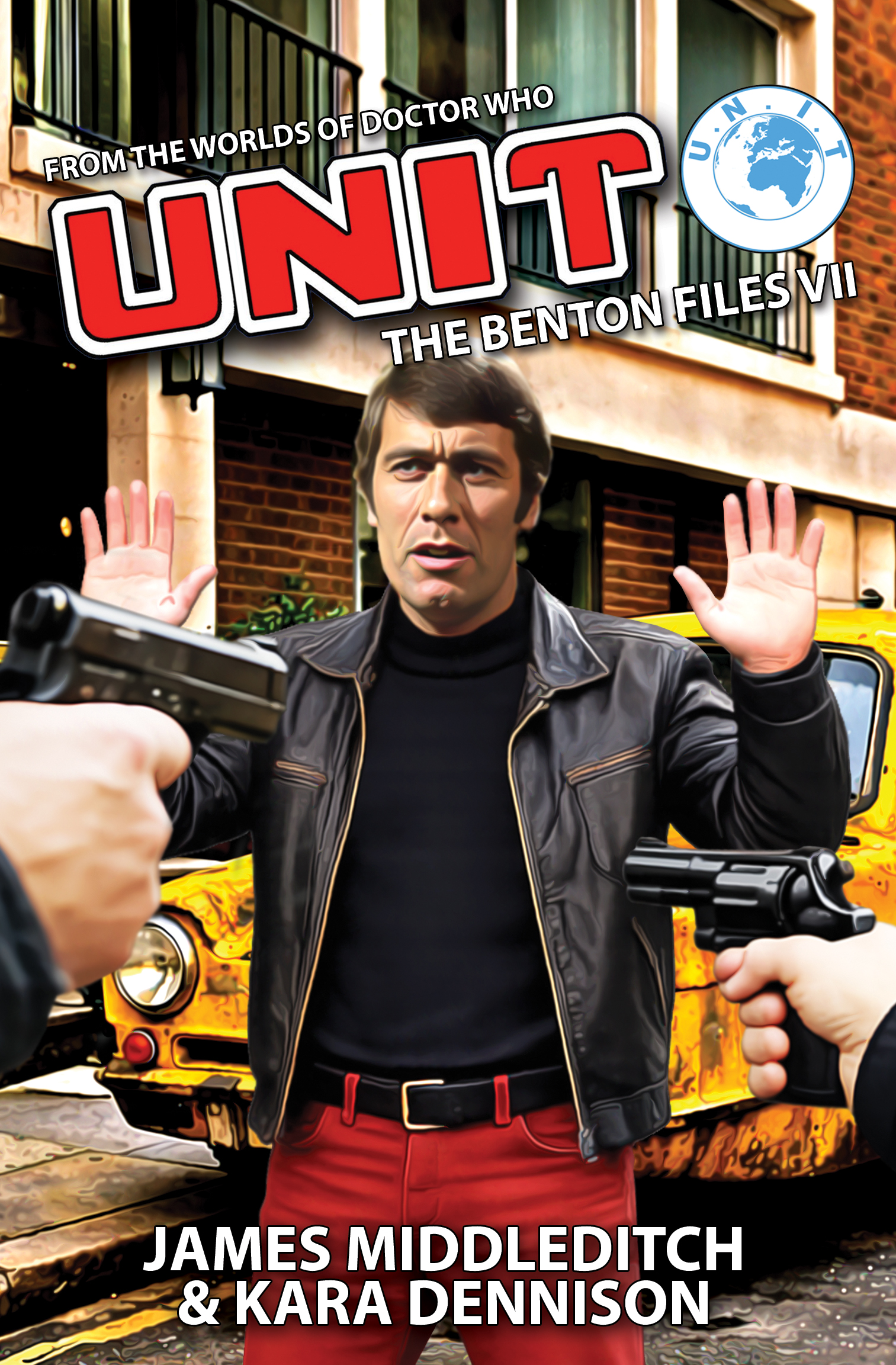
  • UNIT: The Benton Files 7

    My first foray into the UNITverse is now available for pre-order! Pick up a pair of linked stories by yours truly and James Middleditch. Mine, titled "Wiltshire Drift," follows a retired Benton through the countryside in search of a car with some serious alien power under the hood.

  • NEW FICTION: The Whole Beast

    My new flash fiction piece is now available to read free on Dream Theory! Even in a world overrun with kaiju, sometimes spite is still the best motivator.

Showing posts with label theater. Show all posts

Friday, December 19, 2025


When I told UK types this show was on my list, the initial response was pretty much unanimous: “Have you been to a panto before?” The answer is yes, once, ages ago - but it’s true we just don’t have anything like this at home. My closest comparison is “family-friendly Rocky Horror,” but even that isn’t quite right.

All that said, there was sort of an extra layer to the London Palladium show. It wasn’t just a panto, it was their panto - with a recurring cast, running jokes, and a very specific style. If I had to compare this specific production to anything, it would be Steve Allen’s 1985 Alice in Wonderland miniseries: there’s a story we all know, and there is a central title character, but really we’re all here to see a big group of very specific talents show off. The plot is secondary, perhaps even tertiary.

This is a positive review, incidentally. There was no plot, the skits barely hung together with each other by a thread, and I had a great time.

Sleeping Beauty was the conceit, with the story fast-forwarding almost immediately to Aurora’s manufactured meet-cute with the prince and her 18th birthday. Emily Lane and Amonik Melaco gave their roles the full Disney treatment, though Melaco (who was promoted from last year’s ensemble, apparently) got an extra dose of ribbing and comedy sketch work alongside the stars. If you aren’t familiar with panto, know that they aren’t the stars. They’re the excuse for everything else.

Julian Clary, Nigel Havers, Rob Madge, and Paul Zerdin are the Palladium’s panto mainstays. Madge (whom I first saw parodying Glasgow’s Willy Wonka experience on TikTok) appeared as the Diva of Dreams, a sort of host character who also filled the good fairy roles. Ignore the second act “Don’t Cry for Me Argentina” parody lyrics - Madge was a centerpiece of the production and shone through it all.

Julian Clary absolutely takes the spotlight and is clearly very loved in the panto space. His costumes, like his comedy, were wonderfully camp and over the top. His double act with Nigel Havers was delightful. And while I’m frankly picky about ventriloquists, Paul Zerdin won me over. I absolutely understand why this core group returns, and is beloved, year after year.

As for the guests, they were a Doctor Who fan’s dream. Catherine Tate (as the evil Carabosse) and Jon Culshaw (as King Julian’s detective) went toe-to-toe, going “undercover” during Aurora’s birthday celebrations. For Culshaw, this meant impressions; for Tate, despite her early-show protestations, this meant playing some of her famous characters. I never thought I’d see Nan doing a rendition of “Don’t Stop Me Now” with a chorus of dancing grannies behind here, but here we are. Culshaw was on top form as always. And while Tate’s comedy isn’t for everyone, it’s absolutely for me, and I loved it. (She handled one enthusiastic heckler with more poise than I would have.)

The sets were unbelievable, with giant thorny vines filling the front of house at the end of Act 1 and huge moving set pieces covering the stage throughout. Despite the deliberately flimsy focus on the story, the key moment of Aurora pricking her finger on the spindle had one of the most gorgeous bits of set in the whole show. A fire juggling act toward the front, depicting the burning of all spinning wheels in the kingdom, was a close second.

While the show itself was great fun, it’s also worth noting that this was the Palladium’s 10th anniversary of panto, and the opening number showcased some great moments from its past. This included Madge performing a “One Short Day” parody coupled with footage of past performances, as well as actual set pieces and props from previous years. This opening alone showed me what I was stepping into - not just a tradition of panto in the UK, but a very specific cast and style with a positive reputation.

It was huge, it was noisy, it was silly,  and I loved it. It’s vaudeville but better. It’s happy and unselfconscious and, while the panto I went to before was fun, this one helped me “get it.” It’s a bit bigger than local pantos - by which I mean a lot bigger (fire, a dozen costume changes, pyrotechnics in general) - and understandably a tougher ticker to get. But if you can? Do. Please.

3:00 AM   Posted by Kara Dennison in with No comments
Read More

Wednesday, December 17, 2025


I remember when Ride the Cyclone took off online. And when things take off online, it’s a bit difficult to get me to partake because God knows I’ve been burned before. But this show fortunately did not disappoint, and for a couple of years now I’ve wanted to see a live performance. With Southwark Playhouse staging the show’s first-ever UK performance, I had a solid opportunity during my recent trip.

Since changes are actively made to this script over the years and there are many aspects open to interpretation, I came in a little hesitant. But frankly, I think this was fantastic. It was clearly made with a lot of love for the show and its characters, and changes and embellishments made sense.

For those unfamiliar with the show, it follows a cast of six Canadian high schoolers - Ocean, Noel, Constance, Mischa, Ricky, and an unidentified Jane Doe - who died in a roller coaster accident on a choir field trip. Under the eye of a fortune telling machine named Karnak (himself about to “die” as a rat chews through his power cable), the teens talk about their lives and dreams, with one chosen at the end of the performance to come back to life. While Ocean presses for someone of value to be chosen, the others sing about their internal lives and fantasies… or, in Jane Doe’s case, her lack thereof.

The staging is dark and dreamlike, set in the warehouse of a run-down amusement park, and this staging absolutely captured that atmosphere. Rather than being a puppet positioned to the side of the stage, Karnak was positioned above the stage and played by a live actor (Edward Wu, channeling Cecil Baldwin and doing some excellent animatronic acting). As with previous stagings, this one makes use of projections and relatively sparse set pieces. The costume changes are excellent, especially for “Noel’s Lament” and “Space Age Bachelor Man.”

The choreography was absolutely fantastic, and the cast has some amazing dancers in it. “Talia” went full-on with traditional dancing from both Mischa and Noel, as well as some surprise breakdancing from Mischa at the end. “What the World Needs” had the High School Musical vibe it deserves as well.

“The Ballad of Jane Doe” was very different from the version most will be used to staging-wise, but - and this may be contentious - I preferred this one. Jane wasn’t flown around the stage, but the floating head illusion using a coffin was fantastic and felt more appropriate for her anyway. The dancing, the funeral scene, and the final coffin lid slam at the end were all perfect, but none of the staging took away from Grace Galloway giving the vocals the full send.

As for changes that will matter to hardcore fans. “Uranium Suite” was used instead of “Fall Fair Suite,” which I understand is the norm but I’ve always thought the latter was stronger. Keeping to the changes made in 2023, Ricky is no longer written as specifically disabled, but rather as mute due to trauma. There were a few other small changes here and there, but nothing that I felt altered the flow of the performance or that newcomers would consider “odd” on a first watch. There’s also a final surprise right at the end, something I’d wished a production would do, and seeing it happens for real was amazing.

Ride the Cyclone is a show that’s extremely flexible, allowing for inventiveness that can make it better or make it feel wrong. Fortunately, this first UK outing for the show is exactly what it needed to be: dark, strange, heart-rending, funny, and gorgeous. I envy new fans experiencing the show for the first time through this production. This may well become the new bar for future productions.

3:00 AM   Posted by Kara Dennison in with No comments
Read More

Thursday, December 11, 2025


It’s not often that I get to shows - usually when I go abroad. So while I do have a category for it, expect to see things added to it for maybe one month out of the year. Unless, of course, I actually start paying attention to the things that tour in my area.

That aside.

The Importance of Being Earnest was my priority ticket for this trip. It’s my favorite play ever, besides which it now has Stephen Fry playing Lady Bracknell. I’d heard positive things about the previous cast of this production (which included Ncuti Gatwa as Algernon), so I was looking forward to it.

Short version? I liked it in theory, but some things didn’t feel right in practice.

Production-wise, it took a handful of liberties. An early scene shows Algy (in this production played by Olly Alexander) in a big pink ballgown playing the piano at a party. It’s a fully drag, very lavish scene. It’s not a scene in the original, but it very much set the stage for the aesthetic of this specific production. Both in and of itself and as a marker for the mood of this production, I enjoyed it.

Visually it was lovely. The costumes were gorgeous and colorful, equal parts coordinated and opposing. (Algy’s white suit against Jack’s black mourning garb was a great image.) I liked the use of front-of-curtain mini-scenes to cover set changes. In other words, lots of fantastic choices.

But the actual directing of the cast felt like… a lot?

I remember seeing Stephen Fry as Oscar Wilde in Wilde. There was a scene where he was overseeing a rehearsal of Lady Windemere’s Fan, and he cautioned the cast not to luxuriate in their jokes and wordplay. To paraphrase, he said that the actors should act as though this is simply how people talk. I’ve taken that to heart, and I have noticed that Oscar Wilde feels wrong when you give his words the full send.

The four lead cast members - most of whom I’ve seen in other things and whom I’ve enjoyed in other performances - all played their roles as if they were constantly told to be bigger and more. And that’s not in reference to the content, like the playing-up of things Wilde himself had to keep hidden, but rather the delivery. So many of the upsells of lines (Miss Fairfax talking about “vibrations” being a big one) felt like someone somewhere in the production feared the audience wouldn’t understand the joke. Again, I’ve seen three of the four leads in other things, and I’ve seen them be fabulous. This feels more like delivering what the director wanted.

Algy, easily the one who could have gotten away with being the most flamboyant, was the one who carried this off best. He was still big, but he was big in a way that felt like that’s just who he was - not like his actor was digging for a laugh. And even when he was going what felt “too big,” it was always tone-matching another character. Even his asides to the audience felt natural where they could have felt like a bridge too far. I’m not at all familiar with Olly Alexander, but this performance has made me want to be.

It feels like a bit of a cop-out to say that Fry as Lady Bracknell was the linchpin of the production, but he really was. He was very clearly playing Stephen Fry as The Dame, which was probably the best way to approach it under these circumstances. But he let the lines do the work for him and got more natural laughs. He is easily my favorite Lady Bracknell so far, and far and away my favorite member of this cast. Could it be that the audience was primed to laugh for the national treasure? Maybe. I suppose. If I’m being diplomatic. But he and the rest of the “older gen” cast in general - specifically Miss Prism and Dr. Chasuble, who were both fantastic separately and adorable together - felt somewhat more balanced.

The short version is I wanted to love this. I wanted to be fully in the joy of this vibrant production, and in many, many cases, I was. But I feel like this production was constantly at war with itself: making bright and bold additions to the set, the music, the casting, and yet feeling like Wilde’s words needed to be screamed to be appreciated. Was I disappointed? No. I still had a wonderful night, and I still loved what I saw. But I feel like my quest to see the best possible production of this play has been only half-fulfilled, and I still dream of the production that hits Just Right.

10:00 PM   Posted by Kara Dennison in with No comments
Read More

Wednesday, November 20, 2024


As I mentioned in my London diaries for this year, I did finally buckle down and see The Mousetrap. It's been running for 72 years, so there's technically no real concern of it suddenly stopping its run. But there is that little part of my brain that assumes that the minute I decide I can just see it "whenever," this pillar of English theatre will suddenly collapse just to spite me. (Don't laugh, it happened with a really good chicken restaurant so now I have trust issues.)

Recognized by the Guinness Book of World Records as "the world's longest-running play," Agatha Christie's The Mousetrap is what I guess we'd term a "cozy murder mystery" in this day and age. It takes place in a massive country house turned guest house, just after a major murder has made it into the papers. As demonstrated early in act one, literally anyone in the cast could be the murderer, and they could absolutely kill again. The audience is silently invited to play detective as the story spins out, with the final twist being one of theatre's best-kept secrets.

Or at least it was 'til someone put it up on the Wikipedia article. But I didn't look before I went because that didn't feel sporting.

I was present for the 29,811th performance of this history-making play. So... is it worth it?

Yeah sure I think so.


The Story


I, frankly, do not care that you can look up the ending online. I am keeping my summary spoiler-free. The cast asked nicely at the end and by God I shall listen.

The story takes place at Monkswell Manor, now owned by Giles and Mollie Ralston and soon to open as a guest house. The married couple have four guests on the docket for opening: Christopher Wren (not that one), Mrs. Boyle, Major Metcalfe, and Miss Casewell. A fifth guest, calling himself Mr. Paravicini, also arrives amidst a raging snowstorm that cuts off the Manor from the outside world.

Just before the action of the play begins, a woman named Maureen Lyon is murdered. The killing hangs over the entirety of the play, initially because every person who walks through the door appears to be dressed fitting the description of her murderer. But the murder veers closer to Monkswell Manor when they receive a visit from Detective Sergeant Trotter, braving the snowstorm to tell them that the murder is in fact tied to this very manor.

The prehistory of The Mousetrap unfolds bit by bit, with nearly every character having some tie to the much older tragedy believed to have inspired this murder. Someone else in Monkswell will die... and by the end of the first act, they do.

From there, the story becomes a locked-room mystery, with the story of an abused young brother and sister underscoring the action from the past. The murderer is in their midst—and if the constant appearance of "Three Blind Mice" is any indication, one more person will die on this night.


The Twist


"But she's just said she's not giving away the twist!" I'm not. But I do still want to talk about the fact that it exists, its place in theatrical history, and its place in mystery fiction as a whole.

It was interesting coming in as an audience member in 2024, relatively immersed in all sorts of detective fiction (both as a reader and an occasional writer). In many genres, we're in an era where pretty much every twist that can be twisted has been twisted. Things that were once surprises are now tropes, and it can be difficult to remember that when going back and viewing the trope-maker. Nowadays, we "twist" stories by mashing up genres, or fitting a genre or medium used to tell one type of story to another type of story. (Magilumiere Co. Ltd., for example, subverts magical girl tropes by using them to tell a story of finding satisfaction in an adult work environment.)

In other words, the twist of The Mousetrap has emerged in other detective fiction in the decades since. But in the time it was written, it was very new and very subversive and was something of a commentary on the whole genre itself. If and when you go to see it yourself, bear that in mind: this is of another era. This is history-making for more reasons than "lots of performances." You may guess the twist (I did and then second-guessed myself), but it's because Christie herself helped to grow the murder mystery genre with her works (this play included).

And if you don't guess the twist, I don't blame you. Like I said, I second-guessed myself. And there are enough red herrings to jar and pickle for the winter. But even those red herrings (or at least most of them) have a purpose in the larger plot.


The Writing


It won't surprise you to know that the writing for The Mousetrap is Very Good Actually; nor will it surprise you to know I'm especially intrigued by it. A book and a play are two very different beasts, requiring two very different writing methods. Books are read leisurely (by some, I hear); plays happen in a set time at a set pace. With a book, you can flip back and check things you may have missed or reference things that seem important. In a play, you're on a ride and you're not getting off 'til it's over.

As a person of very flighty brain, I was initially concerned about having to remember multiple suspects/potential victims as Giles and Mollie started going over their ledger. But I love the trick Christie pulled here: finding reasons to repeat the names of the lodgers several times in list form—checking their reservations, swapping their rooms, etc. By the time the house was full, you had "Christopher Wren, Mrs. Boyle, Major Metcalfe, Miss Casewell" lodged in your mind.

Each character's personality, motivation, and (chiefly) reaction to everything going on around them differs enough that even if a name slips your mind, everyone stands sufficiently apart. This is naturally well done on the actors' part, too, but it's also very rooted in the writing. Miss Casewell's snide, aloof exterior is worlds apart from Mollie Ralston's professionalism thinly spread over a waiting panic attack. Every character also has layers, and seeing those layers fall away to reveal someone completely new and different and vulnerable is amazing.

There's a reason Agatha Christie is as celebrated as she is. And if for some reason you haven't already seen it in book after book, The Mousetrap will show you.

In short—I went to see The Mousetrap because I love Agatha Christie, and because it's A Thing You Do when you're in London. You go see the forever play with the secret ending. But the focus on its cultural significance fell away as I got into the story, and yeah, there's a reason it's gone on as long as it has.

3:00 AM   Posted by Kara Dennison in with No comments
Read More

Bookmark Us

Delicious Digg Facebook Favorites More Stumbleupon Twitter

Search