New fiction, reviews, tea, and so on.
  • Celestial Toyroom Issue 553

    Purchase the latest issue of the Doctor Who Appreciation Society's official zine, or download a free copy! Read my reviews of the Fifth Doctor-centric CT annual and the new 15th Doctor book Spectral Scream. Plus, there's a review of my own Black Archive on Mawdryn Undead!

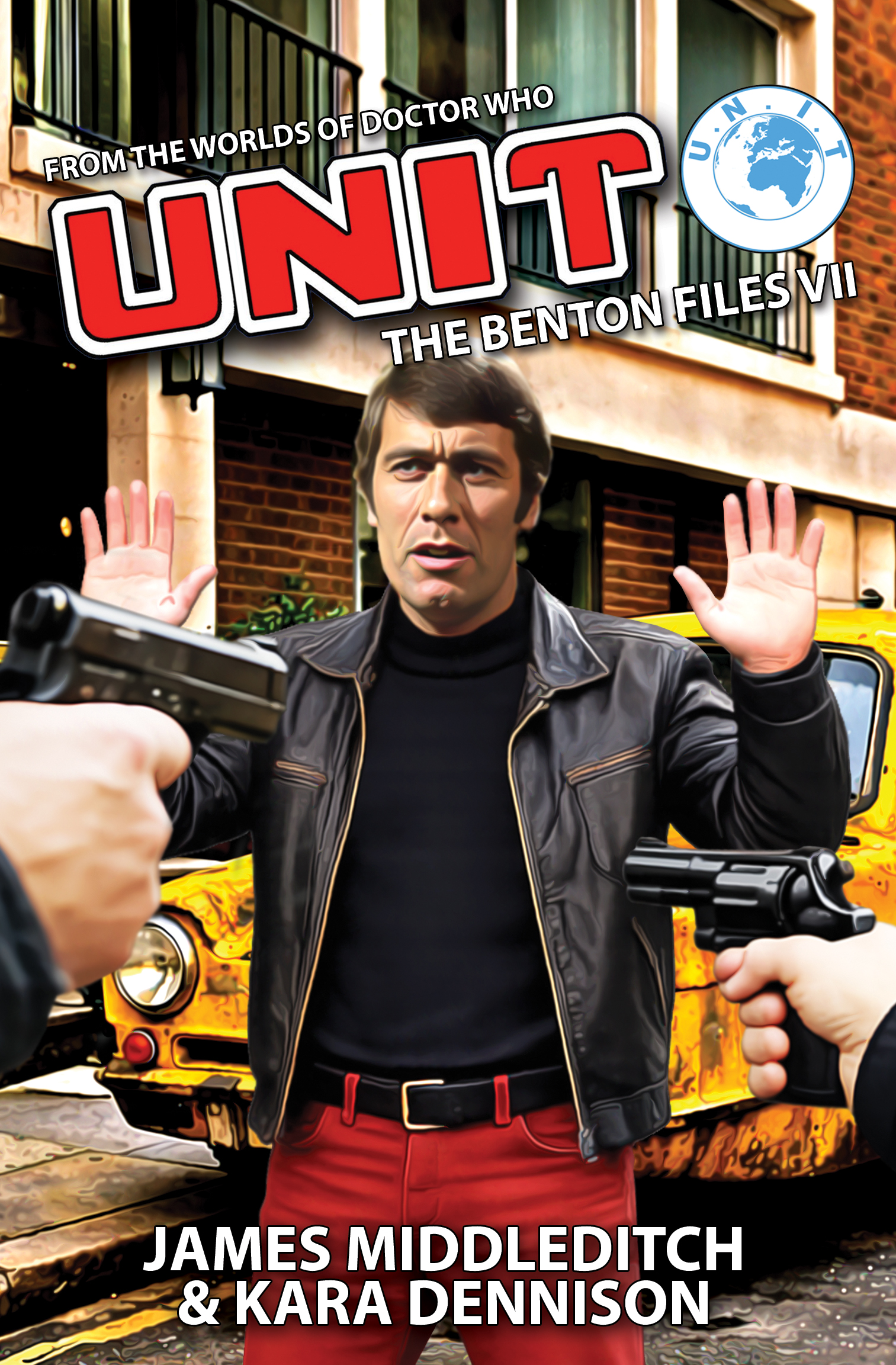
  • UNIT: The Benton Files 7

    My first foray into the UNITverse is now available for pre-order! Pick up a pair of linked stories by yours truly and James Middleditch. Mine, titled "Wiltshire Drift," follows a retired Benton through the countryside in search of a car with some serious alien power under the hood.

  • NEW FICTION: The Whole Beast

    My new flash fiction piece is now available to read free on Dream Theory! Even in a world overrun with kaiju, sometimes spite is still the best motivator.

Showing posts with label pop culture. Show all posts

Friday, July 3, 2026


Back in 1982, Tom Baker took a turn as legendary detective Sherlock Holmes in a multi-part adaptation of The Hound of the Baskervilles, opposite Terence Rigby as Dr. Watson. Now, thanks to AUK Studios, he's back in the role... though things are a bit different this time!

I was one of many backers for the new Sir Sherlock full-cast audio drama, starring Baker as an older, knighted Holmes and John Leeson as Dr. Watson. The casting of the two opposite each other once again is, on the surface, a fun conceit (as they famously starred as the Fourth Doctor and K-9 in Doctor Who). But even ignoring the novelty of the decision, this pair make a wonderful duo, and their spin on a Holmes and Watson in a more modern era is stellar.

This first story, The Red Letter Day, takes place in 1924, just after Holmes has accepted his knighthood. He's just come in from London after time away with his bees and is, of course, reacquainting with Dr. Watson. But as the two are catching up, Holmes receives a strange missive — red ink on red paper — pointing him to a certain ancient monument in London. The two set out to discover what inspired the letter, and find that a double murder has taken place near Cleopatra's Needle. After so many years apart, the two decide to get back on the case. But they'll be matching wits with not only a murderer, but also a new sleuth who is reminiscent of Holmes in his heyday.

Tom Baker's performance is, of course, delightful. He's a Holmes who is more relaxed, even cheerful, but still the same observant and set-in-his-ways Sherlock deep down. Leeson's Watson is a perfect match, equal parts fond and frustrated but still believably contained within one character. The two have a complicated job, creating a version of this legendary chemistry that has evolved believably over time. And, frankly, they've done it. This isn't just "Holmes and Watson but not thirty years old." These are those personalities with time and experience sharpening some angles and weathering others. Never once did I catch myself analyzing the performances, simply because I was immediately on board. They are Holmes and Watson from the get-go.

Like any "first episode," The Red Letter Day has a lot of heavy lifting to do, meaning there's more of a balancing act between the mystery and the worldbuilding. A great deal of time is spent setting up the new cast, including Lestrade's granddaughter Emily in her role as police sergeant and the mysterious newcomer Norton. But there is intrigue enough to be had in the double murder, and it comes to a sufficiently twisty, but interesting conclusion. (And that's not to mention the reveal of who this new consulting detective really is!) As ever, Barnaby Eaton-Jones is fantastic on the production side, and he's put together a truly brilliant project.

Included with the CD was a novelization by Kenton Hall, which mimics the style of the classic Doyle stories excellently. I've worked with Kenton on a Holmes book before, so I was already aware of how well he nails the style. While I encourage everyone to listen to the audio drama for the full experience, the books are excellent on their own.

Also included was "The Long Goodbye," a shorter audio primarily between Emily Lestrade and Norton. It's a much more character-driven piece, bridging the gap between the first and second episodes. I enjoyed it a great deal, and it was a nice denouement after the action of the main attraction.

I already knew I was fully on board with Sir Sherlock when I backed the first Kickstarter campaign, and this first episode has absolutely delivered.

The Kickstarter for the second episode, The Sickle and the Sea, has a few days remaining and is at over 300% of its goal. Plus, if you pledge, you can add on a copy of the CD of The Red Letter Day!

3:00 AM   Posted by Kara Dennison in , with No comments
Read More

Monday, June 15, 2026


A24 is very much a "no middle sliders" studio. They're either going to show you the best thing you've seen in ages or a hot mess that at least still looks cool. Their decision to give "Backrooms" YouTube series creator Kane Parsons his own film was a bold one. And even as someone who's followed his channel and loves a bit of Internet-grown horror, I was iffy. The Backrooms are a setting, and one that's become somewhat open-source (even if Parsons's backstory involving ASYNC has become one of the best known versions). I feared that, in an attempt to do justice to something that's very big and sprawling, we wouldn't get a movie with depth and focus.

So okay, fortunately I was wrong. And while I don't think it was absolutely perfect, I do think it was really strong and very promising. And the approach taken was one that makes this analog horror juggernaut accessible without a deep dive.

I'm going to steer clear of spoilers because this is something that deserves to be experienced firsthand, so read on with confidence.

Clark is a very angry man currently attending therapy with Mary. He's been kicked out of his house by his wife and is now living in his failing furniture store. One night, woken by a power surge, he goes into the basement and discovers he can pass through a section of wall into a vast labyrinth of yellow rooms. He initially believes this place to be an as-yet-unknown extension of the store itself, but his mania to figure it out soon takes him over. Eventually, Mary receives a phone call luring her to the store, and she discovers the strange space Clark discovered, as well as its inhabitants.

Immediately, what works about this movie is that it is a character piece within the sandbox of the setting. We do indeed get some background about what the Backrooms could be, but it's all through the lens of Mary and her traumatic childhood. (Clark is not our central character, mind; he's our inciting incident.) ASYNC, the company exploring the Backrooms in Parsons's YouTube series, do indeed have a presence. But they hover indistinct throughout for the majority of the film, present either through devices threaded through the rooms or as silent watchers of Clark and Mary's exploration.

The two things that keep this movie strong are the script and the visuals. (Multiple facets of the movie were excellent, but these were the two pillars that would cause the whole movie to crumble if they collapsed.) The movie isn't done entirely in Parsons's blurry analog style, but there are multiple sequences shot essentially identically to the YouTube series: blurry visuals that make you question what you're seeing, shadows that disappear off the edge of frame before you can fully register them. Embracing or removing them entirely would both have been disastrous; this middle ground works, and it lets us see what Parsons can do in a more traditional style.

At the same time, Will Soodik's script treats the setting of the Backrooms not as a puzzle to be solved within the film's runtime, but as a metaphor for the psychological "path of least resistance" that keeps us comfortable in stagnation. It's not a stretch to interpret the film this way, either; it's right there on the surface, it exists in discussions between Clark and Mary. But the choice to make that the plot of the movie is absolutely brilliant, simply because of what analog horror and liminal spaces are in the first place.

Both of these trends have had a major uptick recent years, with Parsons racing to the head of an extremely packed field. It's an aesthetic and style of horror that I think first hit home with very specific demographics, of which I am a part. I remember those classrooms and play places and restaurants that, in hindsight, feel somewhat off. The degradation of old photographs and old memories wear away the edges of those places, making them feel both welcoming and haunting at the same time. A place you're certain you know every inch of, but that feels on some level like you shouldn't be there.

And perhaps that's why the concept of the Backrooms has resonated so much: because on some level, it's like our memories. We could nest ourselves in our pasts, in our old patterns, and be safe but still know it's not really where we're meant to be. We can deceive ourselves that it's close enough, and the longer we stay, the more strangely comfortable we feel. But these pasts that we cling to are distorted by nature, and they in turn distort us and the people in our lives.

I'm not sure how I feel about the film's ending. Not the final shot: that was great. But the final scene proper. It felt nearly properly paced, but not quite. But that could also just be the fact that it's the director's first movie. Having a secondary plot thread that feels slightly off is a very, very small issue in a first film that's otherwise legitimately impressive.

You don't have to have seen Parsons's original Backrooms YouTube series to enjoy the movie, but it still is a very enjoyable watch. I can't wait to see what he does next. I will be along for the ride every step of the way.

3:00 AM   Posted by Kara Dennison in with No comments
Read More

Friday, May 15, 2026


It didn't occur to me until very recently that I'd actually missed the whole final "season" — if "season" is the word I'm looking for — of David Renwick's Jonathan Creek. I'd watched up to the tail end of Sheridan Smith's time on the show, ducking out when Sarah Alexander joined the cast as Jonathan's wife Polly. Nothing against the actress or the concept or the show; I think around that time, I'd begun to spend more time watching things for work and less time hunting down rips of things when they aired.

A few weeks ago, while showing later episodes to my friend Katy (we take turns showing each other series on Wednesday evenings), I realized that the last four episodes would be episodes I hadn't seen, either. We'd be equally in the dark. Which was kind of cool.

So now I've finished it. And I don't really know how to feel.

There are very valid complaints to be made about Jonathan Creek as a whole. Some people I know are turned off to it because it's not necessarily the sort of mystery you can solve alongside the sleuth. A lot of the solutions are frankly ridiculous, but that's never bothered me since we've known since day one that these were going to be really unhinged crimes. And, admittedly, there are a lot of jokes and bits that really have not weathered the test of time. But on the whole I have fun with it.

The appearance of Jonathan's wife Polly, and his move from the windmill and the world of magic to a mundane desk job, felt odd. Don't get me wrong, if my two options were "work a 9-to-5" and "be forever associated with stage magician Adam Klaus," I would also flee to something a little less likely to involve constant litigation. And I read somewhere that the windmill was no longer available for filming, so I get it. But there was something a little unsettling about the idea that Polly had "tamed" or "rescued" Jonathan. I appreciate that the final four episodes subverted this at least a little. Yes he's wearing a suit and tie to work, yes his biggest concern between cases is babysitting for a neighbor or whether he'll build a scarecrow for the village fair. But he still has that itch to investigate, and Polly does demonstrate an eventual knack (and occasional enjoyment) of lateral thinking. But the "wifey says no" vibe that would sometimes surface, especially early in her appearances, rubbed me the wrong way. I feel like Jonathan could settle down, get married, and investigate on the side without it being portrayed as something Done To Him.

All that aside, my thoughts are primarily on the film-length finale, Daemons' Roost. That's where I'm most undecided. I've seen that it's apparently Renwick's farewell to the show, short of a Kickstarted book coming out soon, and it definitely feels like that. But I'm on the fence about where it leaves me. There are pros and cons. Walk with me. (Spoilers for a decade-old mystery show follow.)


Pro: Jonathan's Backstory
As my friend and I noticed while watching, this really did feel like a farewell to Jonathan Creek. Jonathan clears out the windmill, and with this resurfacing of old belongings comes a resurfacing of old memories. The story of his brother writing him fake notes from the faeries, and the discovery that he kept these tiny notes in an out-of-date desk globe, was a sweet capstone to the character enchanted by magic but still rooted in reality.

Con: What Came After
As I mentioned, this story resulted because Jonathan and Polly are junking out the windmill. With a slightly different chemistry, this could have been a sweet moment with no odd overhangs. But with the things I previously mentioned, this idea that Polly "rescued" Jonathan from his previous life, it feels a little less like Jonathan has made a choice and more like Polly has won. It was still a sweet and somewhat sad moment, but it felt odd for that.

Pro: Warwick Davis
Jonathan Creek has always had awesome guest stars, especially if you're a Doctor Who fan. Seeing Warwick Davis get pride of place in this episode as a magic-loving, mystery-solving priest was fantastic. It's rare we get to see guest stars in step with Jonathan, with a notable exception being the late Rik Mayall as a surprisingly competent police detective. So I adored this.

Con: So, Jonathan straight up killed a man.
All right, I don't know how I feel about this. I'm not saying the faves can't be problematic. And we are watching a murder mystery where life is cheap enough to buy narrative hooks with. And the person in question was trying to kill him and Polly, and would absolutely have done so if not taken care of. I suppose it helps to realize Jonathan and Polly's somewhat awkwardly-written relationship — he'd fry a man alive in a hell pit for her — but he's never really been depicted as someone willing and able to kill, and it was a somewhat odd choice in the eleventh hour. Could this have been spun out into a narrative thread? "Wow, maybe this life is getting too dangerous now that I have loved ones, perhaps it's time to put this aside at last and focus on this new life"? Absolutely. But we didn't go there. We just fried a man in a hell pit.

Pro: The Hammer Horror stuff.
Couching Daemons' Roost in over-the-top Hammer horror, and in a dramatized depiction of an allegedly real case of demon worship, was kind of par for the course for Jonathan Creek. But it was still very fun. They nailed the look and feel of the old films while still managing to create an actual mystery to unravel.

Con: The Hammer Horror stuff.
I... don't know how I feel about the torture room. The overall idea — the change of perspective and the automaton — is pretty fun. But after walking away from the episode for a day, I'm not sure how it holds up under fridge logic. (A common Creek problem, and one I generally just say "whatever" to.) The "Striped Unicorn" case felt more like standard speed for the series, but this one felt like a case of power creep: needing a huge, over-the-top mystery to go out on, and then having to construct a solution. I don't know, I've never met any Victorian cultists. Maybe they would build a torture room with an automaton.

Pro: Classic Case Name-Checks.
It was pretty fun to actually hear old cases revisited, even if only briefly. Treating the Striped Unicorn as one among them was a neat approach, too. It also reminded me that Satan's Chimney isn't available on BritBox, and I need to find it so Katy can see it.

Con: The Whole Tyree Subplot.
One thing I've noticed about this era of Jonathan Creek is that it tries to make its episodes extremely dense. There have been multiple stories per episode before, but there are a lot of threads in the final four. That's not a bad thing, but I feel like the whole House of Monkeys connection existed for extra peril and very little else. I legitimately believed it was going to be a brief one-off, and it just felt like a bit too much amongst everything else.

There was a sense of major difference throughout these final four episodes: some by desire, some by necessity, some because things simply change when you're telling a story. It ended on a dissonant note, but not a heinous one. At the end of it all, I think I had confirmed for me what so many viewers continue to say: the seasons with Caroline Quentin were the gold standard.

If you're into that sort of thing, of course.

3:00 AM   Posted by Kara Dennison in with No comments
Read More

Wednesday, November 6, 2024


The time prior to my trip to London was pretty busy in terms of getting ahead on work, finishing a book (more on that later), and other work. Among that was some editing for last month's new Black Archive, covering Under the Lake and Before the Flood and penned by Kevin Decker and Ryan Parrey.

I stepped up as secondary editor for this one because, frankly, I love a Twelfth Doctor story. And this one is an old favorite for a lot of little reasons put together. The Archive itself is, once again, a reminder that no two writers will ever write an Archive the same—even on the same or similar stories.

Decker and Parrey take a very scientific, philosophical approach to the bootstrap paradox in their book. (For those who aren't familiar with this story, it hangs by some pretty huge bootstraps.) If you've ever wanted to see the natural of time travel in Doctor Who fully documented, complete with diagrams, crack this one open. It's an extremely dense read, but one that I enjoyed, as someone who tends to analyze stories as storytelling first and foremost. It's always fascinating to see where other people bite into the huge club sandwich of Doctor Who, whether that be philosophy, science, or personal experience.


This is, of course, not all this Archive delves into. Most books in the series take a multifaceted approach, covering several aspects of the story. This one does the same, touching on Arthurian literature as represented in the person(?) of the Fisher King. And there's an entire chapter on disabled representation in this story, as well as in television in general.

If you are keen on denser reads where the authors really go into their expertise, this is one you'll enjoy. You will absolutely learn new things along the way (I always do, whether I'm writing or editing for this series). And while I can't promise you'll fully be able to wrap your head around the ethics and means of time travel after this, you'll absolutely have insight you didn't have before.

The Black Archive #73: Under the Lake/Before the Flood is available now from Obverse Books. As ever, I can't in good faith review something I had a hand in (albeit a very small one). But I can gently nudge you in its direction.

3:00 AM   Posted by Kara Dennison in with No comments
Read More

Wednesday, July 17, 2024


I give off a vibe of being a person who has seen (and probably read) Bridgerton, but I've only recently gotten around to diving into it. And yes, this may have been spurred on slightly by the Doctor Who episode "Rogue"—when something is deep enough in the zeitgeist that it's influencing one of my favorite shows, it becomes much more difficult to put off.

So, all right. I've seen season 1. My thoughts? In short, I enjoyed it... even if it was laden with my #1 least-liked literary trope.


Generally Speaking


When I told bestie and regular collaborator Ginger that I was going to be diving into Bridgerton, she told me the description she'd heard of it before: "Cocomelon for white women." Which, I'm not going to argue that. If you're not already invested in the machinations of Regency society, you're probably not going to be all that invested in this. It is Pride & Prejudice on steroids, commentated by Dame Julie Andrews with carte blanche to cuss. That either will or won't appeal to you.

Anyway it appeals to me.

Overall I like the cast, and I recognize a lot of them. I did kind of walk backwards into this series, meaning that Regé-Jean Page will always be Xenk Yendar first and foremost to me. (And thus I love him unconditionally.) Ben Miller is always fun to see, and I'm always delighted to see an actor I like manage to make me hate him. Adjoa Andoh (to me, always Martha Jones's mom in Doctor Who) steals every scene she's in, to the point that I have to wait to talk about her or I won't talk about anything else.

I'm not as familiar with the books, though my friend Katy (who is walking me through the series) has given me some background on what's changed and how the books are arranged. I may end up reading them myself eventually. As it stands, I generally like the pacing, and the fact that in season 1 we have a central couple around whom all the other stories revolve. Things like Lady Whistledown's identity and the elder brothers' various crises of identity are all focused through the lens of Simon and Daphne. And I'll be curious to see how that evolves when the focus shifts to other couples in later seasons.


However...


While there are a lot of things I like about Bridgerton, the fact that Simon and Daphne's plot is motivated almost entirely by a lack of communication started to drive me up a wall after a while. Which is not to say that bad communication isn't a valid theme in a story like this: upper class double-talk, the silencing of certain people for no reason other than the boxes they fit in, and sheer misinformation are all valid and interesting pieces of action.

One of the biggest lapses in communication—Violet failing to give Daphne "the talk" and Simon assuming she's had it—falls under this category. It accentuates an aspect of this society, of the different expectations placed on husbands and wives, and of the Bridgerton family as the "head of household" distinction is tossed around like a hot potato.

There was a sense of relief when the Duke and Duchess finally addressed the elephant in the room, but not the pleasant kind that comes after intrigue and anticipation. As engaged as I was by their story, I didn't feel like this reticence to discuss something as important as "children: yes or no" was warranted. Maybe that's my mistake for being a contemporary viewer of a classically-style story.

That said, I think it could have worked. There were ample threads to tie this reticence to rather than simply choosing not to talk about it. I can do the legwork in retrospect to justify it, but having it there of its own volition would have been so much more meaningful.


But Also...


Lady Danbury could have turned this 8-episde series into a 30-minute featurette.

There's something both wonderful and terrible about having an eminently sensible person floating through an ensemble cast—knowing they could solve everything with a bit more screen time. Lady Danbury is honestly one of the best characters in the series, and not just because I feel like she must be seeing the people around her much as ew do. She's managed to make this world work for her, rather than bending herself to fit within it. I'm looking forward to eventually watching Queen Charlotte and seeing how that played out.

Her discussion toward the end of the season with Simon in which she (quite literally) tells him to use his words is as close as we get to a meaningful thematic reason for the lack of communication with Daphne. That salvages some of my issues with that story arc, but it still felt like a lot of drama balanced on a very small infrastructure. For that reason, the stories radiating out from the central story ended up feeling much stronger and more fulfilling in a lot of ways.

That said, I will absolutely keep watching. I want to see what else there is, and I want to see how these characters grow and change. And maybe, when my TBR pile has shrunk a bit, I'll try the books.

3:00 AM   Posted by Kara Dennison in with No comments
Read More

Wednesday, January 24, 2024


Autumn and winter are my favorite seasons. I like the cold. (Specifically, I like being cold and getting warm.) I like the full stretch of autumn and winter holidays. I like the cold-seasons aesthetic. Heck, I even kind of like it getting dark early. But the cold months don't love me back, which is an absolute bastard of a way to be. Like a cheese-lover being lactose intolerant, but instead of gas and stomach pains you lie awake at night wondering if you'll die alone.

I do all the things one needs to do. I get out socially. I get sunlight and take extra vitamin D. I don't drink caffeine after a certain time of day. I say my prayers (which is functionally as close as my ADHD will let me get to meditating or mindfulness). My therapy regimen is none of your business but it exists. And, in a nearly century-old house that's built for a family of four but currently contains me and two guinea pigs, I put on sounds at night. Because if the intrusive thoughts don't get me, the creaking and settling will.

In the darkest of dark months, things just stop working. ASMR used to do it, but now the noises just make me nervous. I used to listen to a British comedy radio station, which had the bonus of running the audio of a Blackadder right around the time I woke up, but somehow even the mix of The Navy Lark and random witcoms wasn't doing it anymore. Then one night I switched the Roku to the little unused TV in my bedroom (my PS4 handles streaming in the living room). The intent was to watch a bit of before-bed Space: 1999, but I remembered that Shout! Factory exists. So I did an experiment: I popped on their 24-hour MST3K channel, put the volume just where I could hear it, and rolled over to go to sleep.

And baby, did I sleep through the night.


Mystery Science Theater 3000 inhabits a weird place in the television zeitgeist. Either you don't know anything about it, or it's an indelible part of your life. There's basically no in between. I remember my uncle bringing over VHS recordings of it from Comedy Central, back when my family decided cable wasn't worth it anymore. And, in fairness, back when I only understood maybe about a third of the jokes. Didn't matter. Robots funny.

I remember going to a live show of Cinematic Titanic one night, and Frank Conniff commented on how MSTies are pretty much the most dedicated fans ever. We were viewers who were dedicated to a show whose every episode was two hours long, and which had been off the air for (then) more than a decade. And with the exception of the first season (not counting KTMA) and the occasional stray Mike episode, I've seen just about all of it. It's all floating around in the brain somewhere. Granted, some episodes stick out more than others ("The Human Duplicators," "Mitchell," and that one "Hamlet" are pretty much always surface level for me). But even those few I haven't seen feel familiar. Because each host has a style of delivery and it's reliable and comforting. And maybe that's what's up.


Because let's be real. Anxiety, or at least my anxiety, is a fear of the unknown. Ruminating on uncertainty. Will I have to have surgery on my leg? How much of it will my insurance cover? How much will I owe on my taxes this year? Will that wind outside blow a hole in my roof? Is that creaking sound in the stairwell just the house settling or an intruder? Is this weird feeling in my chest a panic attack or a heart attack? Are the people I care about safe? And so on, and so on. Not knowing is terrifying, which I know is true of humans in general, but it's a problem for me to the point of causing insomnia. And that's not cool.

So maybe that's what's going on. The introduction of something that's so deeply ingrained in my life brings some certainty to the late-night hours. Even if that certainty is in the form of three people talking over terrible movies.

It's not a fix for everything, of course. It won't take away the uncertainty of the future (or the present). But I think there's something to the idea, no matter how old you are, of finding something that unwavering and reliable to turn to when life won't offer you that security. Maybe it's a favorite book or comic series, or a favorite long-form anime. Maybe it's a certain band whose every song you know. Maybe it's the same as it is for me: knowing that Tom Servo will have a song ready, that Mike will do that "toot-tee-toot" thing whenever silly slow music plays, that certain words just sound funnier in Joel's voice.


We're coming out the other side of winter, and the days are getting longer again. And before long I won't be awake for nearly as many dark hours, and this will potentially be less of a problem 'til winter kicks in again. And in fairness, one TV show didn't "fix" my anxiety. But it lets me experience certainty - weird, unhinged certainty, but certainty nonetheless - for a few hours a night. Not the sort of reflection I expected to have when my uncle brought over that tape of First Spaceship on Venus when I was nine years old, but I've learned not to question a good thing.

3:00 AM   Posted by Kara Dennison in with No comments
Read More

Tuesday, December 12, 2023


NOTE: This post contains spoilers for the entirety of the Doctor Who 60th anniversary specials, including and especially "The Giggle."

There are dozens upon dozens of ways to talk about where Doctor Who has ended up after "The Giggle." The commencement of the RTD2 era brings with it a plethora of bold moves and statements—many, if not most, of which will be better explored by other people. However, a major theme of the third and final special feels like exactly my wheelhouse: the subject of story, of canon, of lore, and (most importantly) of Play.

Amidst rolling back the Metacrisis, recontextualizing the Timeless Child, and introducing bi-generation (and what Russell T Davies terms the "Doctorverse" as seen in Tales of the TARDIS), he made another major statement about where the show stands and where it will likely be going. In short, we seem to be getting the high sign that it's time to put down the canon welders and the slide rules... at least for a bit. It appears the RTD2 era will be an era less bound by the show's own rules of logic and more open to writerly whims.

Or, to put it in the parlance of my other favorite decades-long show, it's going into its Pink Jacket era.


A brief history of Lupin the 3rd will have to wait for another day. Suffice to say, it is a very long-running anime franchise with its own unique eras and stock characters. Each creative mind to touch the series, from Hayao Miyazaki to Godzilla Minus One director Takashi Yamazaki, puts their own unique spin on it. And each era of the TV series is denoted stylistically by a new color palette for our protagonist, the freewheeling grandson of Arsène Lupin. In films and TV specials, those different-colored jackets have become shorthand for what "flavor" of Lupin we can expect.

1984 brought Lupin the 3rd Part III, with a more cartoonish color palette as well as more cartoonish plots. (Think legitimately Looney Tunes ideas, even more than usual.) Since then, Pink Jacket has become a less evoked Lupin style, but an unmistakable one. In 2018's Lupin the 3rd Part V, which contained interstitial episodes paying tribute to each era, the Pink Jacket tribute episode was about Lupin trying to make himself dumber to crack a safe that would only open if a brainwave-reading machine determined you were dumb enough. (Spoiler: it ended with him gorging on fish to make himself so smart that the IQ meter Pac-Manned around.)

Part III was not "bad" (as it was misremembered before we had the luxury of streaming) so much as it was silly, unhinged, and joyfully committed to being that way. And with what we've seen in "The Giggle," I think we're being invited into a similar era for Doctor Who.


The choice to bring back the Toymaker was an interesting and fan-pleasing one. He appeared in one televised story, 1966's "The Celestial Toymaker," played by Michael Gough. And while he's been in and around the books and comics and Big Finish audios, the Toymaker's appearance in "The Giggle" is his first return to the televised series — done with an impeccable balance of menace and camp that only Neil Patrick Harris can dish out. As before, he is a powerful otherworldly being: one beholden only to the rules of fair play, who delights in reducing other powerful beings to playthings.

As we saw in "Wild Blue Yonder," the Doctor appears to summon the Toymaker by invoking a bit of nonsense at the edge of the universe: attempting to thwart the Not-Doctor and Not-Donna with a superstition. With this silly (and frankly Doctor-ly) approach, the Toymaker makes his way into our world, and all bets are off. People are puppets, bullets are rose petals, the Master is a gold tooth in a mouth of too many teeth... it's all a bit wild.

Throughout the episode, the Doctor attempts to explain the Toymaker's MO by stating that there are actually three states of being: Order, Chaos, and Play. Play is not governed by Order or Chaos, and is not beholden to normal rules. It's what makes the Toymaker so dangerous... but, as the Doctor points out, what could also potentially make him so wonderful.

While the Toymaker is naturally not going to change his ways, his state of Play influences the episode. We see our first bi-generation: a Time Lord myth almost certainly brought into reality by the Toymaker's anything-goes mentality. (Note how overjoyed he is at the prospect of bi-generating the Doctor ad infinitum so he can take his time mowing them down.) In one of his first acts as incumbent Doctor, Ncuti Gatwa (still in his pants) hits the TARDIS with a big comedy mallet to double it. He implies that the Toymaker's state of Play may be in effect for just long enough for him to gain "his" prize... but I personally believe the Toymaker's influence will last a bit longer.

And I believe we are being invited to rejoice in this influence.


Doctor Who fans are unmatched in their ability to canon-weld. I've seen this in action as someone who's been writing on the ragged edges of canon for a handful of years now, introducing a WWE branch to Faction Paradox and letting Iris Wildthyme finally enter the City of the Saved. One thing I learned when writing across these expanded universes is that the harder you try to account for everything, the sadder you'll be, and the harder a time you'll have telling the story you want to tell.

In short: if a callback is fun, it's worth it. If trolling through decades of audios, comics, and books to ensure all the corners are tucked in makes it so you can't write... don't do that. The lovely thing about a rights holder is they'll let you know what you can and can't do, and they will rarely limit you as hard as your own dive through the franchise's history will. And as the Whoniverse gets bigger and fuller, we're hitting capacity. There will come a time when you can't add to it for fear of inadvertently "decanonizing" something in the eyes of a subsection of the fans.

While I don't always agree with RTD's creative choices (Martha deserved way more credit and I stewed about Donna's exit for 13 years), I will defend to the death his aptitude for building and future-proofing a show. Someone with his eye for showrunning will have noticed that after the Time War, the Hybrid, the Timeless Child, and the Flux, the series's lore is approaching critical mass... even without counting the expanded universe. In order to continue to tell stories that appeal to old and new fans, something has to give. We need to be allowed to put down the strict rules for a minute and simply play.

The Toymaker, as we're reminded, will always abide by the oldest and most basic rules of play: the rules that keep things fair and fun. He may be a bastard and a half, but he'll never actually cheat. And I believe that's our ruleset for the RTD2 era: guidelines to make sure everyone has a good time, but anything goes otherwise.

Davies has already said that he's looking to go more fantasy than sci-fi in the new season, and the early previews of "The Church on Ruby Road" show that we're getting a pirate ship full of sky goblins. And while I believe the bi-generation represents many powerful things (which I may talk about some other day), I think it also represents the future of the show, at least for now: allowing the heaviness of the past to be put aside to rest and process, and looking forward with joy and curiosity.

Doctor Who is going to get sillier, weirder, and more fantastical than ever. And for as much as I've loved previous seasons, I have a feeling this sea change will be the exact refresh the series needs.

8:17 PM   Posted by Kara Dennison in with No comments
Read More

Friday, May 11, 2018


So this is my life. I've interviewed award-winning actors and writers. I have been published worldwide. I have a major book release in two months. And right now the most talked-about thing I have ever worked on is that danged "Is this a pigeon?" meme.

I'm starting to vaguely understand how Nicholas Gurewitch must feel about inadvertently creating the word "weeaboo."

Now, for starters, I did not create it -- it comes from an anime. I'm also not the only person involved in its creation; there are a handful of us watching in stunned silence as this explodes everywhere. I'm also not salty about it, because this is the most of this particular anime I think the world at large will ever see.

I'm impressed that everyone from Know Your Meme to the frickin' Independent has covered this. But I was there, God help me. Time for the full full context.


Back in the Before Times, when I still had a desk job, I was a fansubber. (Any non-anime fans rolling through: "fansubbing" is subtitling unlicensed, unavailable anime gratis and putting it out for release to fellow fans -- at least it's supposed to be the unlicensed stuff.) This was still just a bit before Crunchyroll and other sites changed the face of anime consumption. There would come a point in the very near future when lots of fansubbers, including myself, would be snapped up by streaming sites and DVD companies to work for them.

At the time, I was bouncing around amongst three different groups doing editing and QC. One, Onmitsu, delivered subtitled oldies with English and Portuguese language tracks. We did a lot of shows from Sunrise's Brave series (follow this link to read more about that -- tl;dr Japan wanted to try doing Transformers).

One was Brave of the Sun FighBird, the second in the franchise and a serviceable little show. I enjoyed it but generally if it has a robot I'll enjoy it. The protagonist, Katori, was a space alien thing who possessed an android in order to interact with humans. He loved the Earth and wanted to protect it, but didn't really comprehend it very well. So it fell to the young audience association characters to keep him in line.


The infamous scene takes place when Katori is trying to act human in front of a detective, while wearing his very science-y human disguise. He also goes on to ask if a row of tulips are violets.


We all had a laugh at the time because, well, Katori. This is pretty standard for him, and it's part of his shtick that he's a noble and true-hearted space cop soldier thing but initially dumb as a box of rocks about Earth.

I then proceeded to forget all about this show because I subtitled about 56 dozen things during my fansubbing years, and then about 56 more during my pro-subbing years before I moved on to news and features. Also literally no one cares about brave shows except me and five of my friends.

And then suddenly. A couple years ago. Fighbird screencap on Tumblr.

It was originally pegged as a bad translation, and I can completely understand that. Fortunately somewhere along the line it was established that nah, Katori is just that dumb. From there, it came and went, mostly with friends popping any new iterations of it to me just to see my reaction.

Then the other day happened and this bitch is everywhere?


So that's it? Yeah, that's it. I'm not gonna go all Makoto Shinkai on you and tell you not to enjoy it. I'm not gonna tell you to go watch the whole show it's from (because how), and that's pretty much the entire story. The group that put the Fighbird fansub together is still friends but has gone its separate ways business-wise, though the majority of us are in the anime industry now unsurprisingly. It's a little bizarre to see this snippet of our lives flooding our timeline, but it's a nice trip down memory lane in a way.

=====

Hey! If this is the first time you've read anything of mine (highly likely) why not have a look around? When I'm not working with Crunchyroll, VRV, or one of many other spots around the web, I'm writing fiction and critical essays on geek topics. I also co-author a light novel series, do a webcomic, and have some Doctor Who-related books coming out in the very near future!


Buy Me a Coffee at ko-fi.com
4:00 AM   Posted by Kara Dennison in
Read More

Bookmark Us

Delicious Digg Facebook Favorites More Stumbleupon Twitter

Search